
Guide
Learn Spanish by Reading: Where to Start
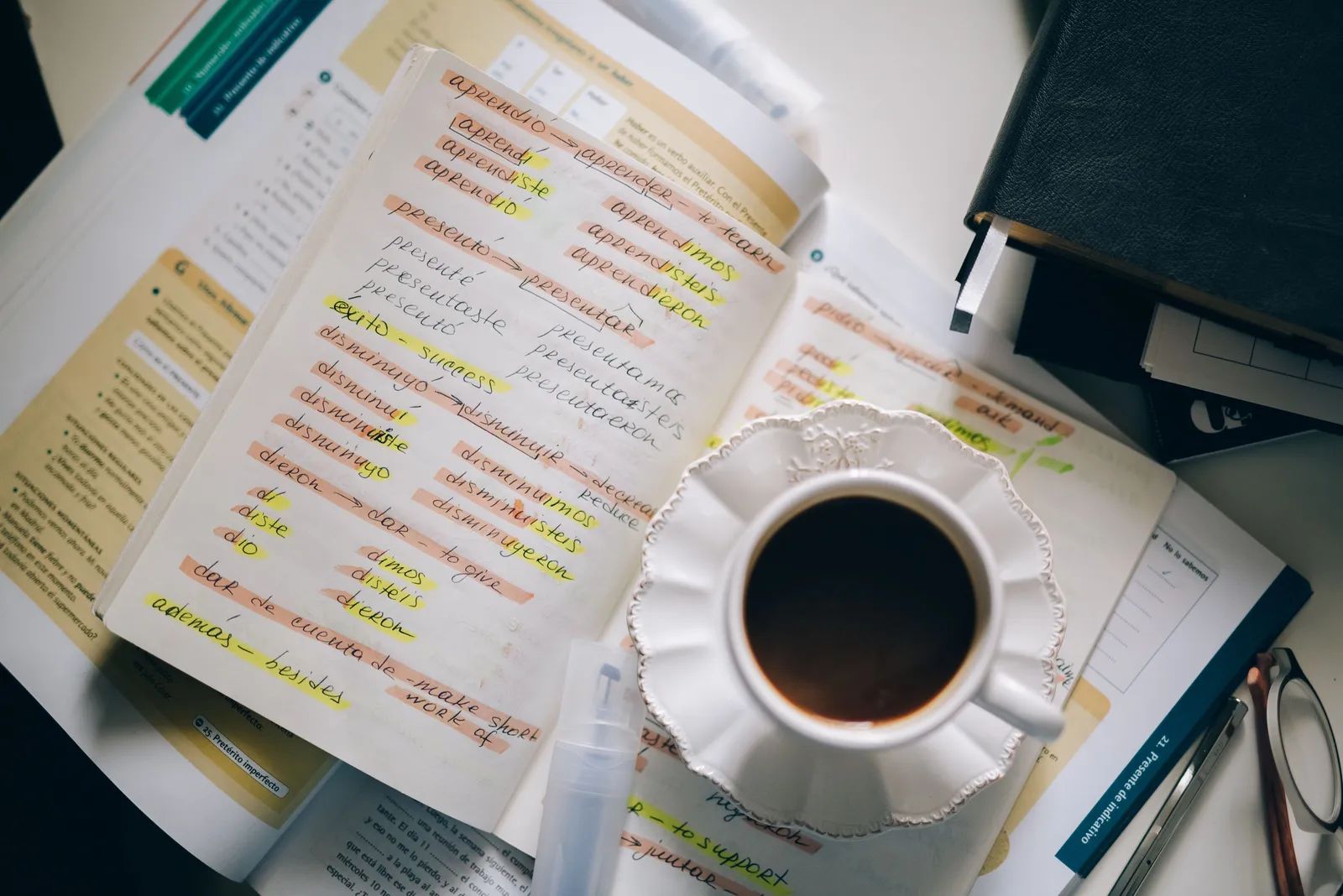
Spanish has around 560 million speakers globally, making it the world's second most spoken native language after Mandarin, according to Ethnologue. That reach is part of why so many learners pick it up, but Spanish grammar still holds a few genuine traps for English speakers. Reading real Spanish text is one of the most reliable ways to work through them, and Lira is built to make that kind of practice easy to keep up.
Why is Spanish hard for English speakers, specifically?
Spanish pronunciation is famously consistent, and English speakers often find early vocabulary approachable thanks to shared Latin roots. The real challenges show up in a few specific grammar areas that don't map onto anything in English.
Ser vs. estar
Spanish has two verbs that both translate to "to be," and choosing the wrong one changes meaning, not just style. "Es aburrido" (he is boring, a permanent trait, ser) versus "está aburrido" (he is bored, a temporary state, estar) is a classic example. English has no equivalent distinction, so there's no shortcut translation rule that reliably works. Learners who try to memorize a list of "ser situations" and "estar situations" tend to freeze up in real sentences, because the actual distinction is about permanence versus temporary state, and that's a feel you build through repeated exposure, not a checklist you consult mid-conversation.
Common Spanish-English false friends
Click a word to see its translation, or listen to its pronunciation:
| Spanish word | You might think it means | It actually means |
|---|---|---|
| embarrassed | pregnant | |
| actual | current | |
| to assist | to attend | |
| exit | success | |
| carpet | folder | |
| sensible | sensitive | |
| rope | clothes | |
| to record | to remember |
The subjunctive mood
Spanish uses the subjunctive to express doubt, wish, emotion, or hypothetical situations: "Espero que vengas" (I hope that you come) uses the subjunctive "vengas" instead of the indicative "vienes." English has a faint, mostly optional subjunctive ("If I were you"), so most English speakers have never had to actively track this distinction. Grammar books explain the triggers (certain verbs, conjunctions, expressions of doubt), but recognizing when the subjunctive kicks in, in real time, is a pattern-recognition skill built through repeated exposure to real sentences.
Regional variation
Spanish varies significantly by region: "vos" instead of "tú" in much of Central America and Argentina, different vocabulary for everyday objects between Spain and Latin America, and varying formality conventions. A textbook usually teaches one standard version, but real-world Spanish text, especially from different countries, exposes you to this variation directly. Learners who only ever study one regional standard sometimes struggle when they encounter authentic text from a different Spanish-speaking country. Reading a mix of sources early, rather than sticking to one textbook dialect, builds a more flexible, realistic sense of the language.
Why does reading help more than memorizing grammar rules?
Repeated exposure to ser/estar and subjunctive triggers in real sentences builds intuition faster than memorizing rule lists, because your brain starts recognizing the pattern rather than consciously applying a rule. This aligns with linguist Stephen Krashen's input hypothesis, which argues that comprehensible input, language you mostly understand, drives language acquisition more effectively than explicit study (Wikipedia: Input hypothesis).
This matters especially for the subjunctive, since it's one of the hardest features for English speakers to apply consciously in real time. After enough exposure to phrases like "espero que," "quiero que," and "es posible que" consistently pairing with subjunctive verb forms, you stop calculating the rule and start expecting the pattern.
How do you pick your first Spanish text?
Choose a text where you understand roughly 90% of the words already, so ser/estar and the subjunctive are the main new territory, not vocabulary overload. A graded reader or simplified classic works better as a first text than an unsimplified novel.
Starting at A2-B1
Graded readers designed specifically for Spanish learners work well here, since they control vocabulary deliberately while still using authentic sentence structures. Simplified editions of well-known stories are also a solid entry point. Try to read a mix of Spain-based and Latin American sources even at this stage, since regional vocabulary differences are easier to absorb gradually than all at once later.
Moving to B1-B2
Once you're comfortable, unsimplified short stories are a strong next step, since each story resets the vocabulary demand and the subjunctive shows up naturally in everyday contexts (hopes, doubts, suggestions). This is a good point to explore free public-domain Spanish texts through Project Gutenberg, which includes classic authors like Cervantes and various 19th-century Latin American writers.
Reaching B2-C1
At this stage, full-length novels, essays, and news writing from multiple Spanish-speaking countries become realistic. Ser/estar and the subjunctive stop requiring conscious thought, because you've absorbed the pattern from thousands of real examples rather than a grammar chart.
What should you do when you hit an unfamiliar word or verb form?
Look it up in context without breaking your reading flow, since context is exactly what makes new vocabulary and unusual verb forms stick. A tool that lets you tap a word for a quick, contextual translation keeps you moving through the story instead of stalling every few lines to consult a dictionary or conjugation chart.
If ser/estar choices or subjunctive triggers keep confusing you across multiple readings, that's worth a dedicated review afterward rather than mid-sentence. Spaced repetition systems, which resurface words and patterns right before you'd naturally forget them, are a well-documented way to move new vocabulary into long-term memory (Wikipedia: Spaced repetition).
How much should you read, and how often?
Consistency beats occasional long sessions, particularly for a feel-based distinction like ser/estar that resists rote memorization. Twenty minutes of daily reading at a comfortable comprehension level builds intuition faster than a single two-hour session once a week. Among learners tracking reading habits inside Lira, those who read most days of the week build their vocabulary review queue roughly three times faster than sporadic readers, since spaced repetition depends on regular exposure to reinforce retention.
Target 85-95% comprehension while reading for enjoyment. Below that range, you're translating rather than reading. Above it, you're not encountering enough new material, including subjunctive triggers, to actually make progress.
Frequently asked questions
Do I need to master the subjunctive before I start reading? No. The subjunctive appears constantly in everyday Spanish, so reading regularly exposes you to it in natural contexts. This gradual exposure builds intuition more effectively than memorizing every trigger phrase before you begin.
Is Spanish easier to read than French or German? Spanish spelling and pronunciation are notably consistent, which makes decoding new words easier for beginners. The grammar challenges (ser/estar, subjunctive) are conceptual rather than structural, so reading comprehension often progresses quickly once vocabulary builds up.
Should I focus on Spain Spanish or Latin American Spanish when I start reading? Either works as a foundation, but reading a mix early builds more flexible comprehension. Vocabulary and some grammar conventions vary by region, and authentic text naturally exposes you to that range.
How long until I can read a Spanish novel without constant lookups? Most consistent readers reach comfortable independent reading of accessible novels around the B2 level, typically after a year to eighteen months of regular practice, often faster than French or German given Spanish's more predictable spelling system.
How Lira helps you read Spanish with confidence
Lira lets you tap any Spanish word or verb form, including a tricky subjunctive conjugation, for an instant contextual translation without breaking your reading flow. Words and patterns you look up are automatically queued into a spaced repetition system powered by FSRS, resurfacing right before you'd naturally forget them. You can import your own EPUB or PDF, paste an article URL, or pick a free public-domain Spanish classic from authors like Cervantes in Lira's built-in library to start reading at your level today.
Key takeaways
Ser/estar and the subjunctive mood are best absorbed through repeated exposure in real sentences, not through memorized rule lists, since both rely on a feel for context that reading builds naturally. Start with graded readers at 90% comprehension, mix regional sources early, and move to unsimplified short stories around B1-B2. Read daily for 20 minutes rather than occasionally for longer, and let spaced repetition handle long-term retention of tricky verb forms.
Claire
Editor at Lira, self-taught in 3 languages, she tests every method or tool before writing about it.
Start reading in your target language
Import a book, an article, or pick a free classic, and Lira translates unknown words as you go.
Start for freeRelated articles

Best books to learn Spanish at B1/B2 level
9 Spanish books suited to B1/B2 level, from full-length classics to contemporary novels, to keep progressing once the beginner titles feel too easy.
Best Books to Learn English at C1/C2 Level
8 English books for C1/C2 readers, from Woolf to McCarthy, chosen for style, irony and subtext rather than plot alone, plus how Lira handles them.

Best Books to Learn Spanish at B2/C1 Level
14 Spanish books suited to B2/C1 level, from García Márquez to Borges, for reading real Latin American and Spanish fiction with Lira.