

Reading practice for students
English reading practice built for students
Hours of class time don't always translate into real progress, especially when the class moves at its own pace. Lira has you read texts at your real level about things you actually care about, so the vocabulary sticks after the test.
Start freeQuick verdict
- ✗Textbook: the class's pace, not yours
- ✗Duolingo: vocabulary out of context
- ✓Lira: your topics, your real level
Quick verdict
- ✗Textbook: the class's pace, not yours
- ✗Duolingo: vocabulary out of context
- ✓Lira: your topics, your real level
Class moves at the class's pace, not yours. You're stuck at the same level despite hours of lessons, and vocabulary you memorize for a test disappears right after: you cram the night before, get a decent grade, and two weeks later it's gone. What actually works is reading texts at your level, about stuff you care about: vocabulary sticks naturally when you meet it in a context that means something to you, not on a list to memorize.
Read about what you actually like
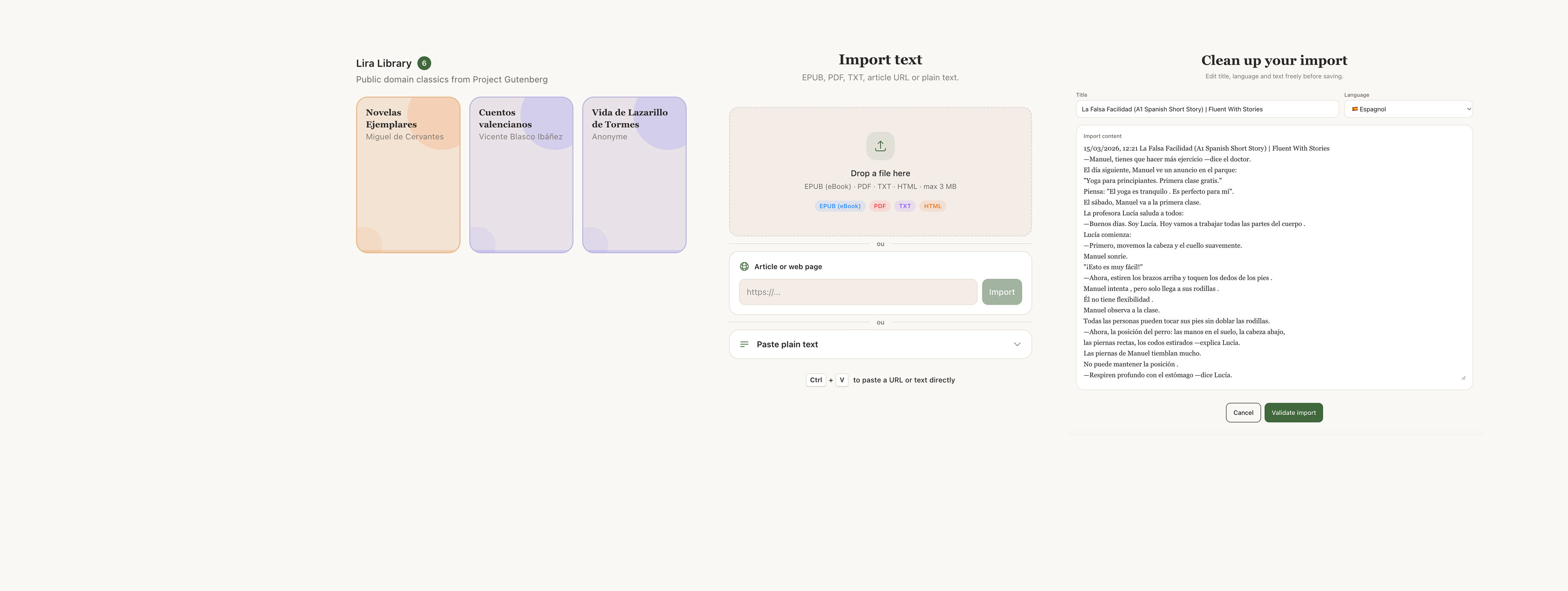
Sports, gaming, news: you pick, Lira calibrates the difficulty and schedules reviews in the background.
23
words learned this week
Why this doesn’t feel like more homework
Not too easy, not too hard
Lira adjusts every text's difficulty so you actually progress, without getting bored or stuck on words that are too advanced. Your level gets refined with every text, instead of being locked in by one placement test.
Topics you actually care about
Sports, gaming, news: you pick, paste a URL or a PDF, and Lira calibrates the difficulty automatically. It's something you want to read, not one more assigned text.
No flashcards to grind through
Words you look up get scheduled for review automatically in the background. You just keep reading, the review pile builds itself.
What you actually see while reading
Not just a promise: here are the screens you use day to day, from the word you click in a text to the review exercises that follow.
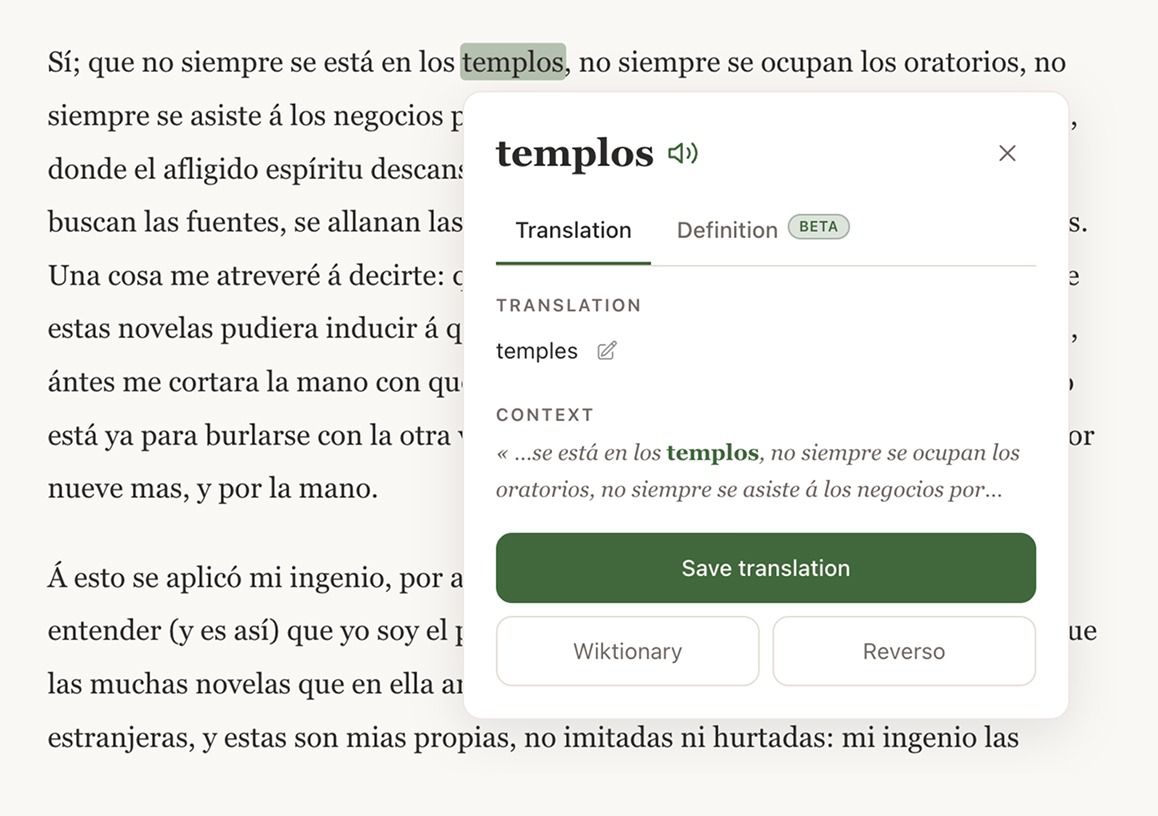
Click a word, the card builds itself
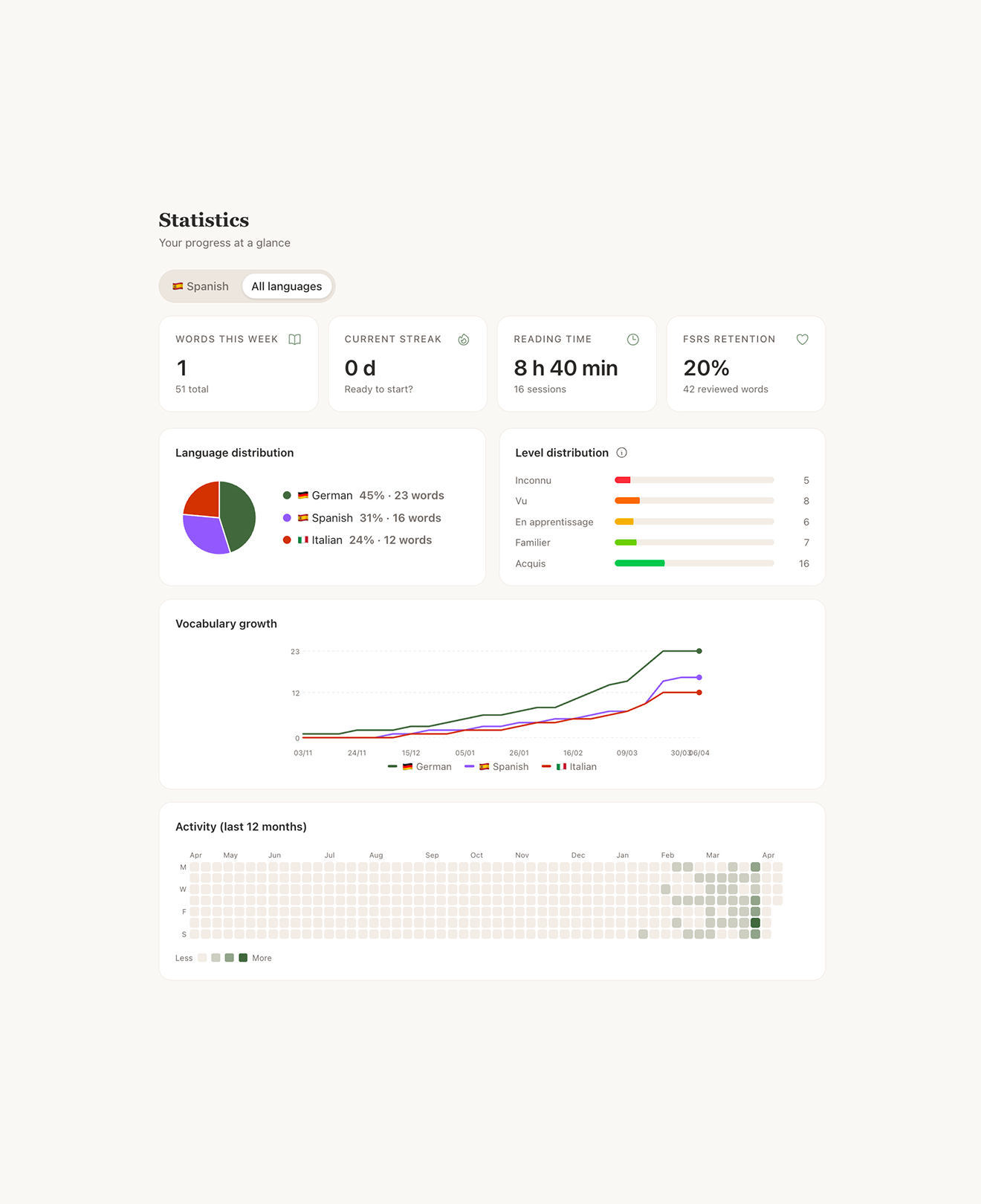
Your progress tracked at a glance
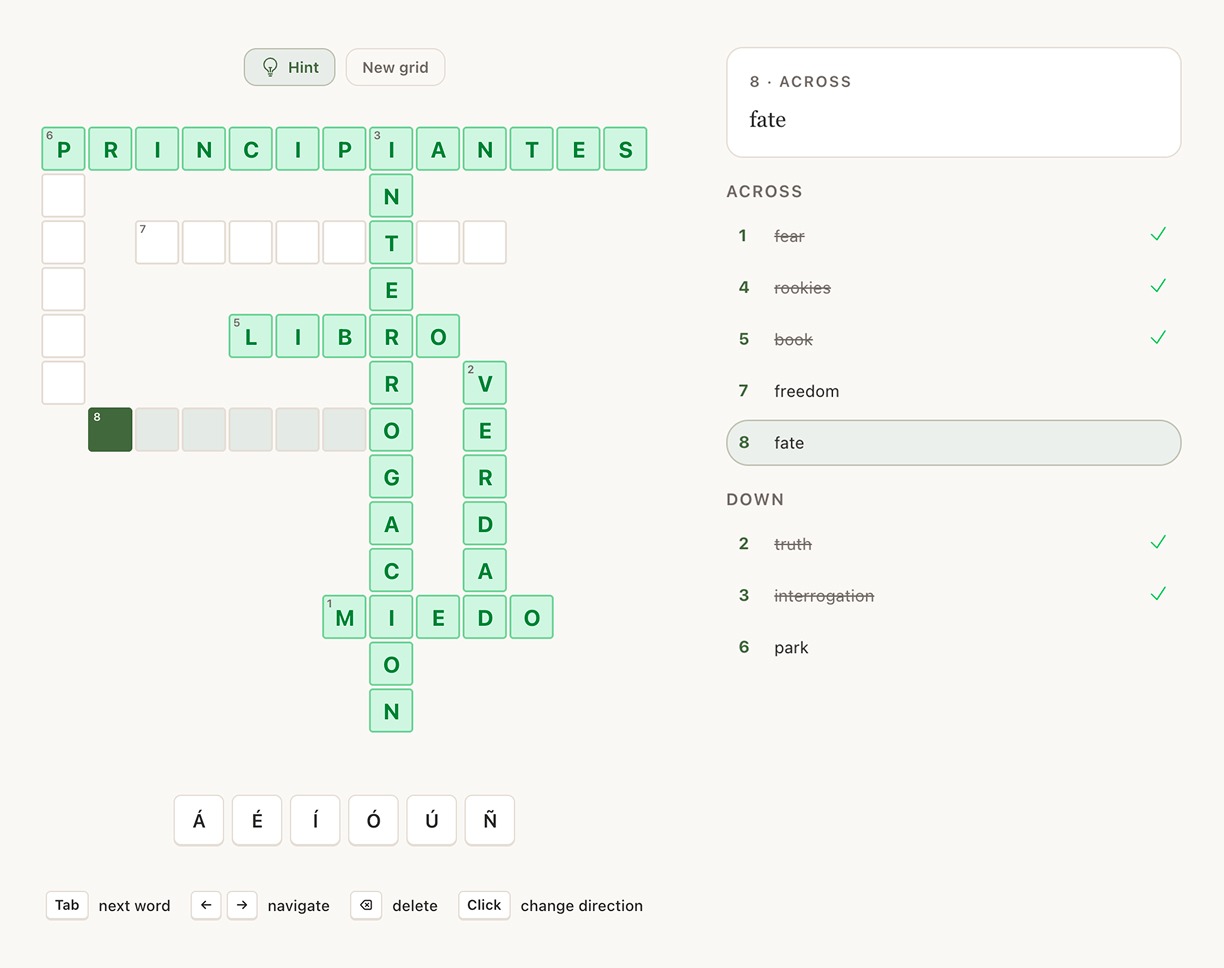
Review cards generated automatically
The science
Why it works: spaced repetition (FSRS)
FSRS calculates, for every word, the exact moment you're about to forget it, and resurfaces it right before that happens, instead of once the night before a test (the gray curve declines fast without that structure). With reviews timed correctly, retention climbs in steps and stabilizes (the green curve): that's the difference between a word that's gone two weeks after an assignment and one that actually sticks, still usable months later without a single extra review.
From students
Way less boring than my workbook.
Maya, 14
English was always my worst subject, not because I didn't get it, just because it was boring. With Lira I read about gaming and soccer, and I'm picking up more words than in class.
Jordan, 15
I don't even notice I'm learning vocab, I'm just reading about a match I actually care about.
Ryan, 14
From parents
My daughter has hated English since 7th grade. She's used Lira every evening for two months now without me reminding her. Her grades didn't jump overnight, but she's way less scared of reading in English.
Karen, mom of a middle schooler
We live abroad and I wanted our son to keep a solid level in his home language without it feeling like extra homework. He picks his own texts, so it doesn't feel assigned.
Laura, mom of a teen living abroad
What sold me was that he chooses the topics himself. No fights about homework, he just reads before bed now.
Marc, dad of a 9th grader
Why not just the textbook, Duolingo, or Anki?
The textbook moves at the whole class's pace, not yours, and its vocabulary isn't necessarily what interests you. Duolingo teaches vocabulary out of context through repetitive drills, and Anki requires you to build your own flashcards by hand. Lira combines the advantages of all three: you read real texts on topics you choose, at your exact level, while FSRS generates and schedules reviews automatically.
| Textbook | Duolingo | Anki | Lira | |
|---|---|---|---|---|
| Adapts to your pace, not the class's | ✗ | ✗ | ✓ | ✓ |
| Topics you choose | ✗ | ✗ | ✓ | ✓ |
| No manual flashcard-making | ✗ | ✗ | ✗ | ✓ |
| Helps with exams | ✓ | ~ | ~ | ✓ |
Go further
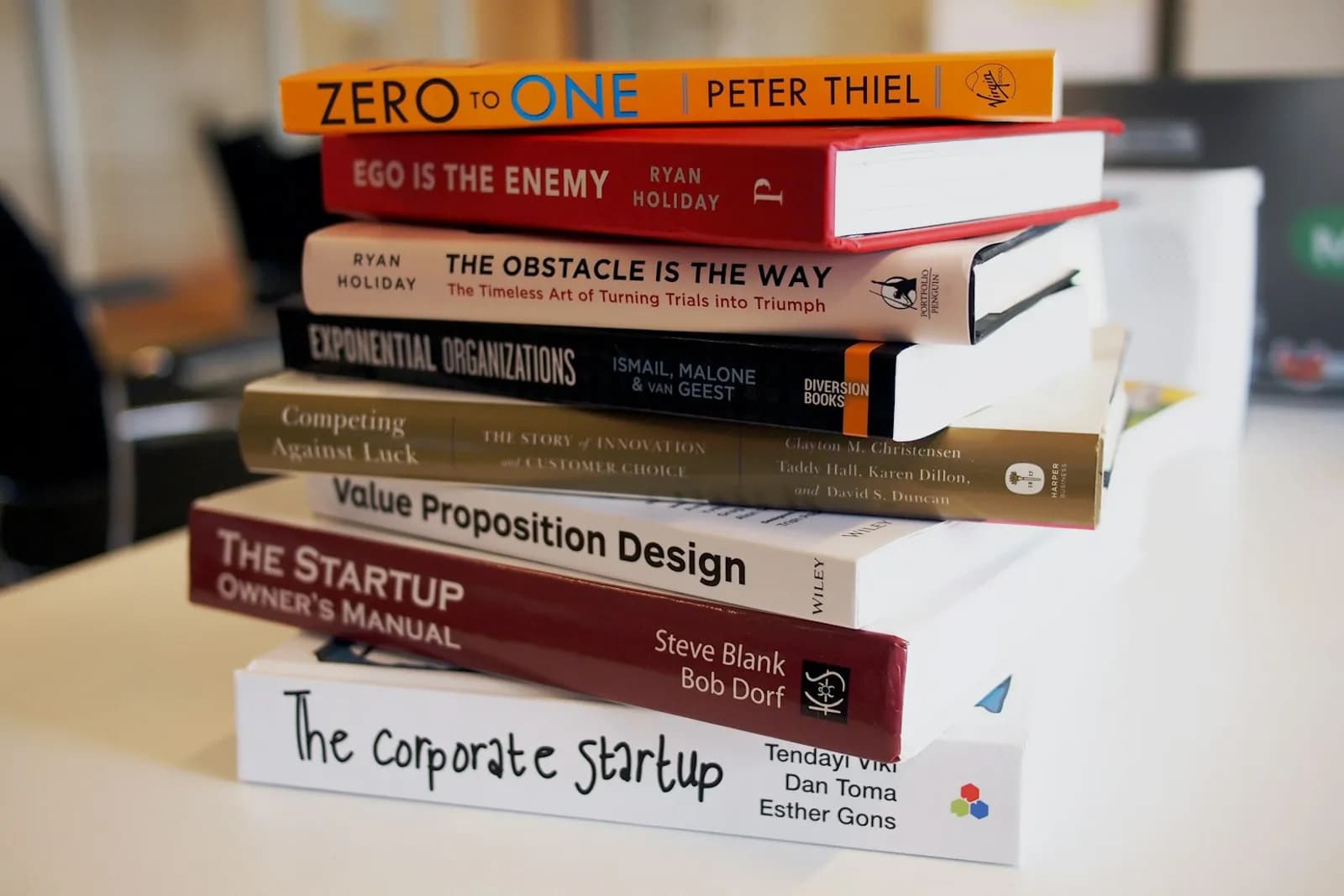
Learn a Language by Reading: The Complete Guide
How to learn a language by reading real texts: the research behind it, how much reading is enough, and a step-by-step method.

Extensive Reading: The Complete Guide to Learning a Language
Extensive reading means picking texts you already understand at 90-95%. Here's why it works, how to start with Lira, and how to avoid common mistakes.

Want to see the difference this week?
Try it free, no credit card, and see for yourself how much reading about what you care about changes things.
Start free