

Anki Alternative
Bring your language deck into real texts
Import your complete deck and its progress for free, then meet those words again in real texts. Imported cards do not reduce your 150 reading-based additions.
Import my Anki deckQuick verdict
- ✓Anki: the best spaced repetition engine
- ✗Anki: every card made by hand
- ✓Lira: cards build themselves as you read
Quick verdict
- ✓Anki: the best spaced repetition engine
- ✗Anki: every card made by hand
- ✓Lira: cards build themselves as you read
Self-check
Is making Anki cards more tiring than reviewing them?
4 questions to gauge your card-creation fatigue.
Question 1 of 4
After a reading session, how long do you spend turning noted words into Anki cards?
Anki or Lira: what to keep from each?
Anki is still unbeatable for total customization and highly specialized community decks (kanji, anatomy, law...). Lira isn't trying to replace that. It fills the gap Anki leaves open for learning a language through reading: card creation and the link to real content, not fine-grained deck management.
| Anki | Lira | |
|---|---|---|
| Spaced repetition engine (FSRS) | ✓ | ✓ |
| Cards created automatically while reading | ✗ | ✓ |
| Real context around every word | ~ | ✓ |
| Complete .apkg import with progress (Free) | ✓ | ✓ |
| Export cards back to Anki (Premium) | ~ | ✓ |
| Specialized community decks (kanji, medicine...) | ✓ | ✗ |
| Advanced card customization | ✓ | ✗ |
Anki does one thing very well: resurface a card exactly when you're about to forget it, thanks to a proven spaced repetition engine. What Anki doesn't help with is making those cards in the first place. You pick the word, type the translation, maybe hand-add an example sentence, or download a generic deck that matches neither your level nor what you're actually reading. The result: either you spend more time building your deck than reviewing it, or you learn disconnected word lists that don't stick to anything concrete. Lira automates exactly that part: you read a real text, click the words you don't know, and the card builds itself, with the real sentence you met it in as context.
Cards built from your own reading, reviewed on Lira's FSRS schedule, no manual deck-building.
From an isolated card to a word you actually met
A typical Anki card looks like "libertad → freedom", with no more context than whatever you took the time to paste in. On Lira, the word comes straight from the sentence you read it in, and the card builds itself.
Import
Drop your .apkg file. Every card arrives for free, and Lira resumes its schedule when the file contains that progress.
Reading
Every new word you translate in a text automatically becomes a card, with its sentence as context.
Review
FSRS schedules every card, old or new, right at the moment you're about to forget it.
La verdad duele más que la mentira.
What Lira actually does
Import the whole deck without losing your progress
Drop your .apkg file: Lira imports every word for free and restores the due dates, intervals, and FSRS state available in the file. Imported cards use none of the 150 slots reserved for words saved from your reading.
Cards build themselves as you read, not as you type
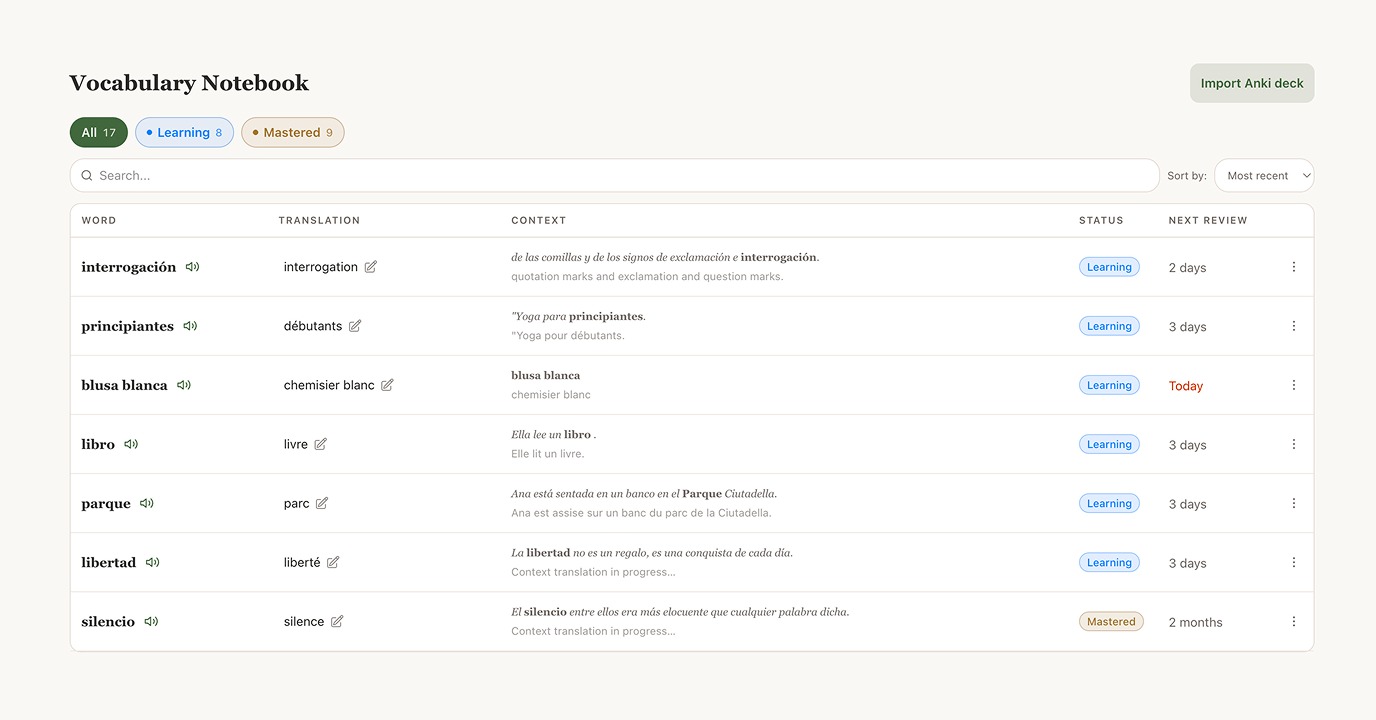
No more opening a deck editor. Read an article, a short story, or a book excerpt at your level; every unfamiliar word you translate becomes a card, with the original sentence as context, without ever leaving your reading.
FSRS, the same engine as Anki, running underneath
Lira runs on FSRS (Free Spaced Repetition Scheduler), the modern algorithm also available on Anki. Every card comes back right before you forget it. What's different isn't how you review, it's where the cards come from.
What you actually see while reading
Not an abstract promise: here are the screens you use day to day, from the word you click in a text to tracking your retention.
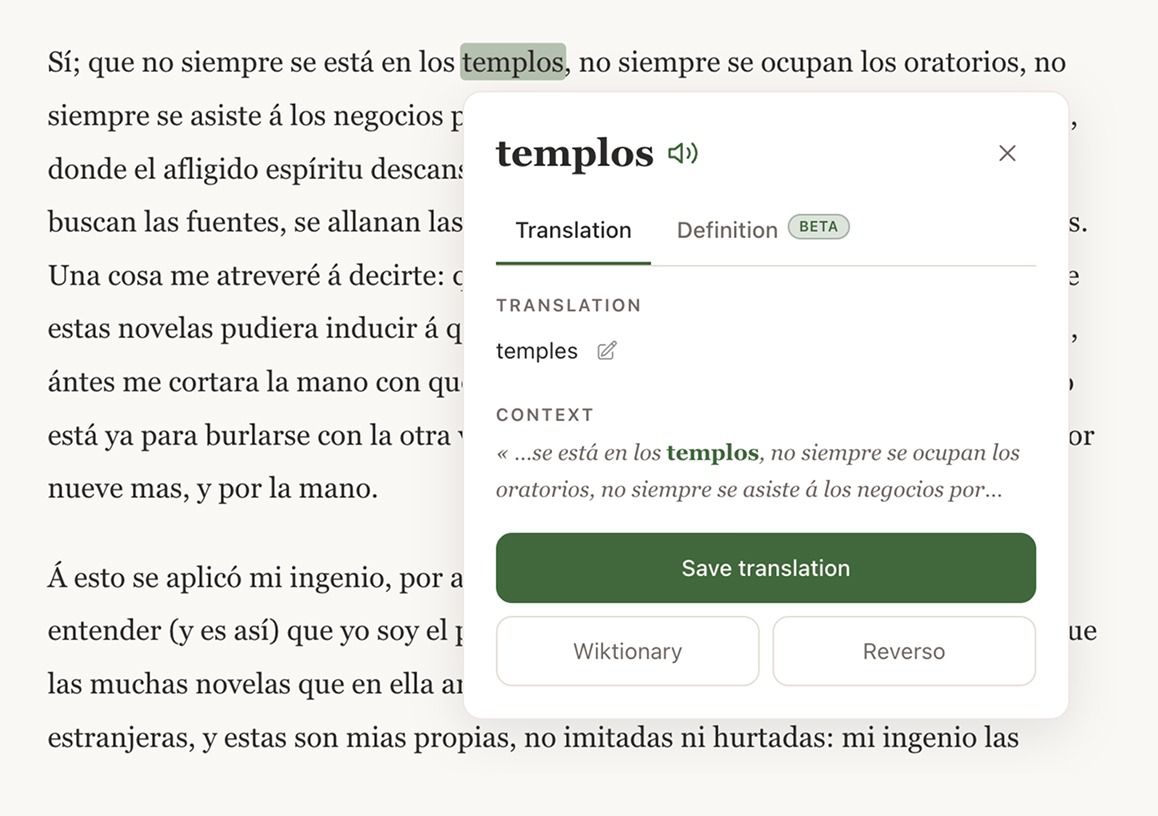
Click a word, the card builds itself
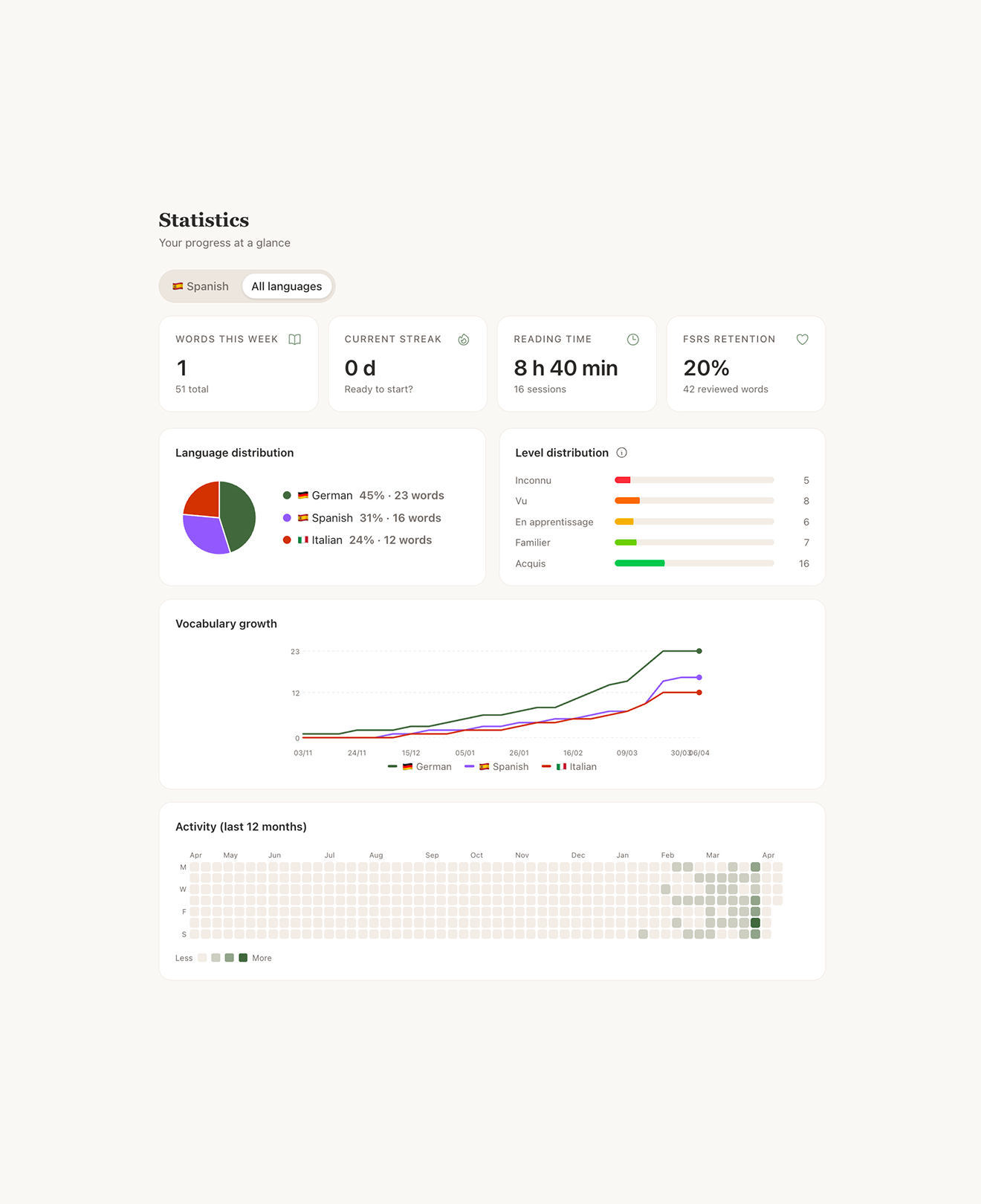
Your FSRS retention tracked at a glance
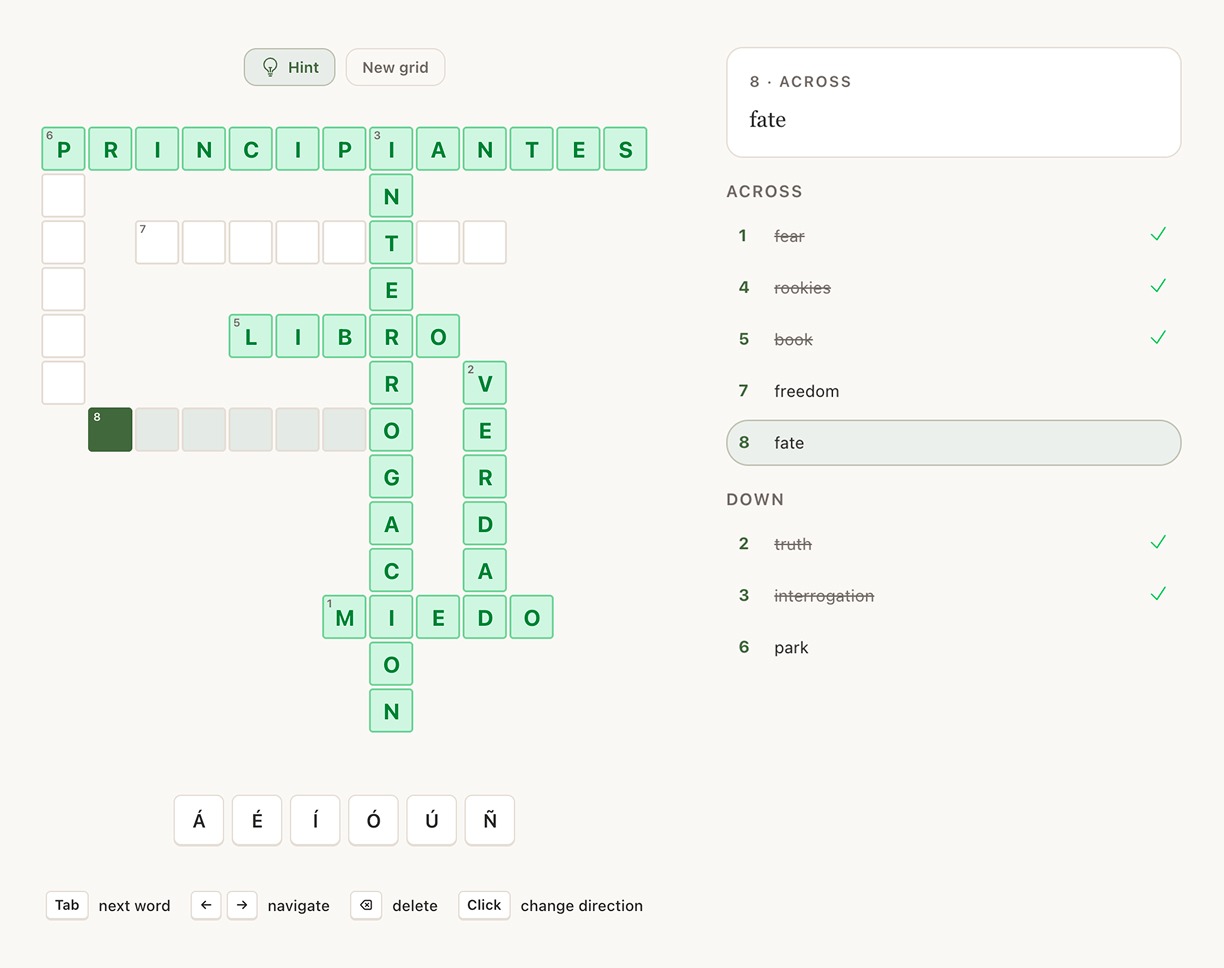
Review exercises generated from your own vocabulary
The science
FSRS: the same engine, a different source
FSRS calculates, for every card, the exact moment your memory is about to lose it, and shows it to you right before. That's already what Anki does, and it's not something we're trying to replace. What's different with Lira is where the cards come from: instead of an isolated word typed by hand, every card comes from a sentence you actually read and understood in context. Without a review structure, memory drops off fast (the gray curve). With spaced reviews at the right moment, retention climbs in steps and stabilizes (the green curve), on Anki just as much as on Lira.
Vocabulary retention over time
One more thing worth knowing about your cards
Anki doesn't inflate your word count the way some reading tools do, since you're the one building each card. But it also won't group them for you: "do", "does", and "doing" typically end up as three unrelated cards you made and review separately, with no link back to the root word. Lira's vocabulary notebook groups conjugated forms under their shared root automatically, so you see "do" as the anchor with its forms listed underneath, while still scheduling each form's own FSRS review on its own timeline, since recognizing "do" doesn't mean "doing" is automatic mid-sentence.
Go further
Best Books to Learn English at B1/B2 Level
9 English books suited to B1/B2 learners, from accessible 20th-century classics to contemporary novels, to push your reading past the beginner stage with Lira.

Best books to learn German at A2/B1 level (2026)
9 realistic books to learn German at A2/B1 level, from Grimm fairy tales to short stories, plus where to find them for free.
The Duolingo Plateau: Why You Stall (and How to Fix It)
Finished the Duolingo tree but still can't read a simple article? Here's why the plateau happens and how Lira helps you move past it.

Extensive Reading: The Complete Guide to Learning a Language
Extensive reading means picking texts you already understand at 90-95%. Here's why it works, how to start with Lira, and how to avoid common mistakes.

Your Anki deck deserves better than copy-paste
Import it in full, including its progress, then keep all 150 free slots for words you discover while reading.
Import my Anki deck