
Guide
Learn English by Reading: The Method That Actually Works
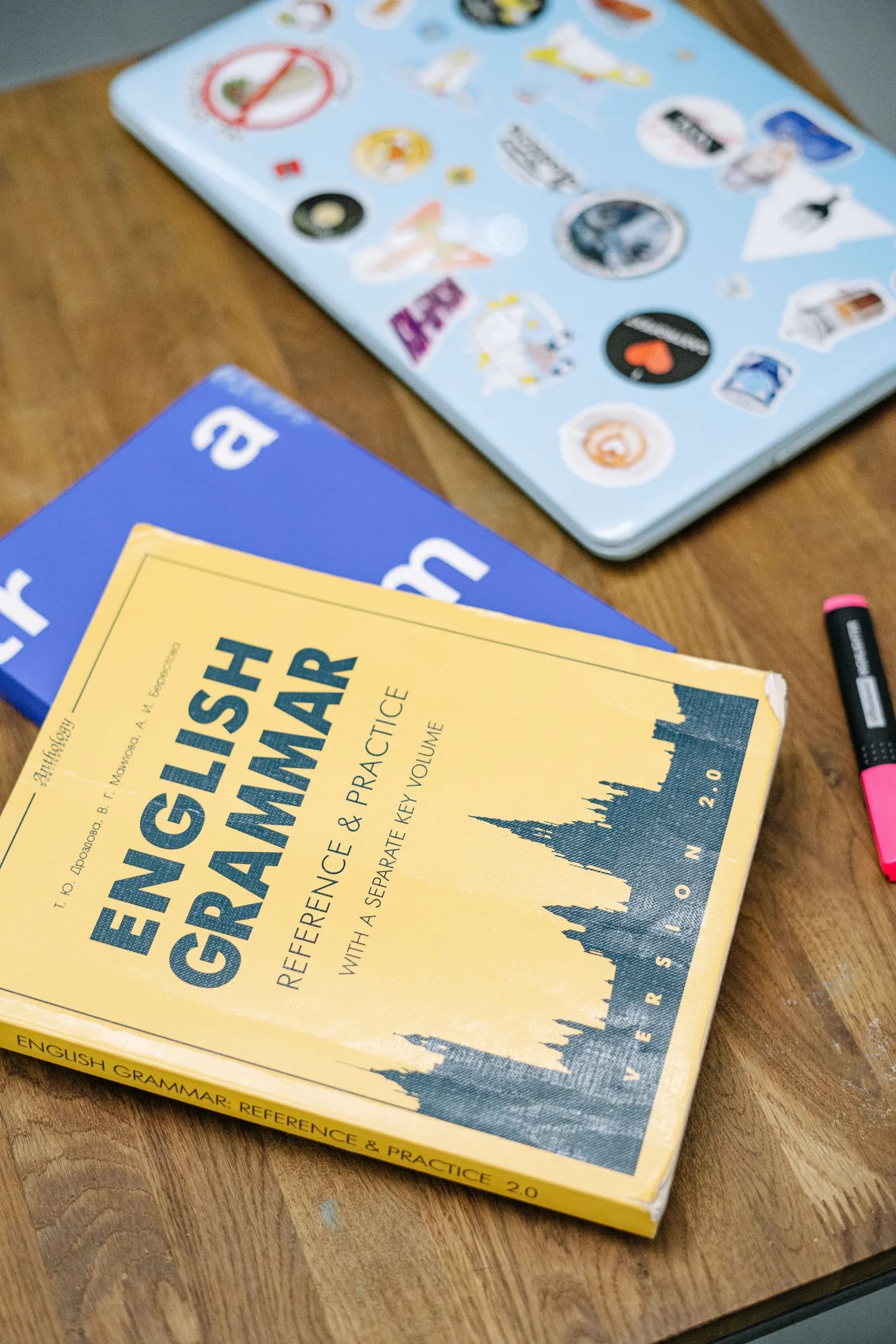
English has around 1.5 billion speakers worldwide once you count learners (Ethnologue), which means more accessible content exists in English than in almost any other language: news, shows, forums, novels. That abundance is also the problem. Most learners are handed grammar textbooks built around rules that don't actually predict how the language behaves, and plateau around an intermediate level as a result.
The three places where English genuinely resists a rule-based approach are spelling, phrasal verbs, and silent or shifting pronunciation. Regular reading is the most direct fix for all three, because it exposes them in natural context, repeatedly, until they stop requiring conscious thought. That's the whole premise behind an app like Lira.
Why English spelling doesn't match how it sounds
English has one of the least phonetically consistent spelling systems of any widely spoken language, a side effect of the language absorbing vocabulary from Old English, Norman French, Latin, and Greek without ever standardizing the spelling to match. "Ough" alone is pronounced five different ways depending on the word: though, through, cough, enough, and thought each say it differently, and no rule reliably predicts which.
Studying spelling rules in isolation has a poor return here, because the exceptions usually outnumber the rule. What works better is repeated exposure: seeing the same word written across different sentences until visual recognition kicks in directly, without routing through a rule at all. That's exactly what extensive reading provides, and a worksheet of spelling patterns doesn't.
Words where spelling and pronunciation quietly disagree
Tap a word to hear it pronounced. These are common, everyday words, not obscure exceptions, which is precisely why they trip people up.
| Word | Why it's tricky |
|---|---|
| though | "ough" sounds like a long "o" |
| through | same letters, sounds like "oo" |
| colonel | pronounced "kernel," not "coh-lo-nel" |
| island | the "s" is silent |
| Wednesday | the first "d" is silent |
| choir | pronounced "kwire" |
| receipt | the "p" is silent |
| debt | the "b" is silent |
Phrasal verbs: the number one obstacle
Phrasal verbs, like give up, look forward to, or put off, rarely translate literally into any other language, because their meaning comes from the verb-plus-particle combination as a whole, not from either word on its own. English has several thousand of them in everyday use (Wikipedia), and they show up constantly in speech, journalism, and casual writing alike.
Memorizing a phrasal verb from a list almost never sticks; the meaning fades within days because there's nothing concrete anchoring it. Meeting the same phrasal verb three or four times in a novel or an article, each time in a different concrete situation, anchors it far more durably. This is a case where context-based learning clearly beats list-based memorization, and it's one reason textbook English and real English can feel like different languages.
Why reading beats rule memorization
A textbook lesson introduces maybe 10 to 15 new words, stripped of narrative context. A novel or a blog post exposes you to just as many words in a few pages, but each one is anchored to a situation, an intention, an emotion. That structural difference is a large part of why so many people study English for years in school without ever becoming genuinely comfortable with it.
Reading works because it combines three things that a grammar exercise never delivers together: the natural repetition of frequent words, context that resolves ambiguous meaning, and exposure to the language's real syntax, word order, and idiomatic phrasing. Linguist Stephen Krashen's input hypothesis argues that comprehensible input, language you understand most but not all of, is what actually drives acquisition (Wikipedia: Input hypothesis).
How to pick your first English text
Pick a text where you already recognize roughly 90% of the words, so you're not stopping every sentence to look something up. A graded reader, a simplified classic, or a short news feature works better as a starting point than a novel written for native adult readers with no simplification. The goal at this stage is momentum and confidence, not literary ambition.
A2-B1: build a base of everyday vocabulary
Favor short texts with simple sentence structure and everyday vocabulary. Fifteen minutes a day, consistently, beats one long session a week. Pay attention to words that keep recurring rather than trying to catch every unfamiliar one.
B1-B2: take on phrasal verbs and idiom
This is the stage to introduce contemporary novels, short stories, or accessible nonfiction. Phrasal verbs and idiomatic expressions become the priority. Note the ones that reappear across a text rather than trying to memorize every single one on first contact.
B2 and beyond: diversify register
At this level, mix genres deliberately: classic novels, journalism, essays, dialogue-heavy fiction. Each register carries its own vocabulary and rhythm, and your base vocabulary is solid enough by now to handle more stylistically demanding writing.
What to do when you hit an unfamiliar word
Look it up in context rather than skipping past it, but don't stop your reading momentum to study it deeply. Staying in the flow of the story is what makes new vocabulary stick, since the surrounding sentence is doing a lot of the memorization work for you. A tool that lets you tap a word for a quick, in-context translation without leaving the page keeps that flow intact.
If a specific word or phrasal verb keeps tripping you up across several texts, that's the signal to review it deliberately afterward. Spaced repetition systems, which resurface a word right before you'd naturally forget it, are well documented as an efficient way to move new vocabulary into long-term memory (Wikipedia: Spaced repetition).
How much should you read, and how often
Consistency beats volume. Twenty minutes of daily reading, at a level where you understand most of the text, moves your English further in three months than occasional two-hour sessions. Among learners who track their reading inside Lira, the ones who read most days of the week, even briefly, build their vocabulary review queue roughly three times faster than sporadic readers, since spaced repetition depends on regular exposure to work.
Don't chase perfect comprehension either. Understanding 85-95% of a text while reading for pleasure is the productive zone. Below that, you're translating word by word instead of reading. Above that, you're not being challenged enough to make progress.
Frequently asked questions
Do I need to master every English tense before I start reading? No. Most everyday English writing leans heavily on the present simple, past simple, and present perfect. You'll meet the rest gradually through exposure, which is more efficient than front-loading every tense before opening a book.
Is English reading easier than English listening? Usually, at least at first. Reading lets you control the pace and look things up, while spoken English moves fast and includes contractions, reductions, and regional accents that written English doesn't show. Many learners find reading comprehension outpaces listening comprehension early on.
Should I read with a translation side by side, or in English only? A bilingual edition can help at the very start, but it encourages leaning on the translated column instead of working out meaning from context. A better middle ground is reading in English with quick, tap-to-translate lookups for unfamiliar words, so you stay immersed while still getting unstuck fast.
How long until I can read an English novel without help? Most consistent readers reach comfortable independent reading of accessible novels around the B2 level, typically after 18 months to two years of regular practice, though this varies with prior language background and reading frequency.
How Lira helps you tame phrasal verbs and irregular spelling
With Lira, you tap any English word or phrasal verb directly in the text to see it explained in context, without leaving your reading. Every word you look up joins a spaced repetition queue powered by FSRS, so it resurfaces right before you'd forget it. You can import your own novels or articles in English (EPUB, PDF, URL) or pick from a library of free classics ready to read.
To build a complete extensive reading method that works regardless of level or target language, our guide to extensive reading covers the principles behind all of it. If English isn't your only target, we also have guides for learning French by reading, learning German by reading, and learning Spanish by reading.
Key takeaways
Reading builds intuition for English spelling and phrasal verbs faster than memorizing rule lists, because repeated exposure trains recognition rather than recall. Start with graded readers or simplified texts at 90% comprehension, move to unsimplified short fiction around B1-B2, and read daily rather than in occasional long sessions. Look up unfamiliar words in context without breaking your reading flow, and let spaced repetition handle long-term retention afterward.
Claire
Editor at Lira, self-taught in 3 languages, she tests every method or tool before writing about it.
Start reading in your target language
Import a book, an article, or pick a free classic, and Lira translates unknown words as you go.
Start for freeRelated articles

Best books to learn Spanish at B1/B2 level
9 Spanish books suited to B1/B2 level, from full-length classics to contemporary novels, to keep progressing once the beginner titles feel too easy.
Best Books to Learn English at C1/C2 Level
8 English books for C1/C2 readers, from Woolf to McCarthy, chosen for style, irony and subtext rather than plot alone, plus how Lira handles them.

Best Books to Learn Spanish at B2/C1 Level
14 Spanish books suited to B2/C1 level, from García Márquez to Borges, for reading real Latin American and Spanish fiction with Lira.