

Before the language exam
A few weeks left, not a reason to start from zero
Whether you left it to the last minute or you've been grinding for months without it sticking, most language exams test reading comprehension above everything else. Lira trains you on real texts at your level to move fast on what actually matters, without redoing years of grammar.
Start for freeQuick verdict
- ✗Redoing all your grammar: too slow this close to the exam
- ✓Lira: reading comprehension + vocabulary, what matters most
- ~Doesn't cover grammar, writing, or speaking (see below)
Quick verdict
- ✗Redoing all your grammar: too slow this close to the exam
- ✓Lira: reading comprehension + vocabulary, what matters most
- ~Doesn't cover grammar, writing, or speaking (see below)
Be clear-eyed about what this covers: Lira builds reading comprehension and vocabulary, the part that decides most exam scores. It does not include grammar drills, written-expression correction, or speech recognition for the oral part. If your exam grades those too, plan to cover them separately. Lira is the fastest way to shore up the reading section, not a full exam-prep replacement.
Which one are you?
Two profiles show up constantly ahead of a language exam. Neither benefits from redoing grammar from scratch this close to the date.
Profile A: Last-minute
Left it to the last minute
The exam is close and you need to catch up on the essentials fast. Forget a study plan, just start reading today, at a level that won't bury you in unknown words.
Profile B: Shaky fundamentals
Working hard, still not sticking
You've put in months of effort and it still doesn't feel solid. That's because reading comprehension tests whether you can understand an unfamiliar text, not whether you can recall a rule, and that's exactly the skill drills never built.
Whichever profile you are, the reading comprehension section tests your ability to understand an unfamiliar text, not recite grammar rules. Lira trains you directly on that, on texts at your real level, so you move fast on what matters most in the time you have left.
How many days do you have left?
Move the slider to your exam date and get a reading plan sized to your actual timeline, not a generic one-size-fits-all schedule.
20
minutes / day
5
texts / week
Steady build
Enough time to build a real habit. Twenty minutes a day, five texts a week, is enough to build real reading speed before the exam without burning out.
The committee reached a consensus after two hours of debate.
Where Lira actually moves the needle before an exam
Reading comprehension, not isolated drills
Most exams test your ability to understand an unfamiliar text. Lira trains you on exactly that, on real texts calibrated to your level, instead of decontextualized sentences.
Vocabulary that comes back at the right time
Every word you look up gets scheduled for review by the FSRS algorithm right before you're about to forget it. Vocabulary builds up over days instead of getting crammed once the night before, only to disappear a week later.
Pronunciation, one click away
Any word can be read aloud (text-to-speech) while you read, so you attach it to its real sound. It's not active speaking coaching, but it stops you from learning a word with an imagined pronunciation.
Your progress, tracked until exam day
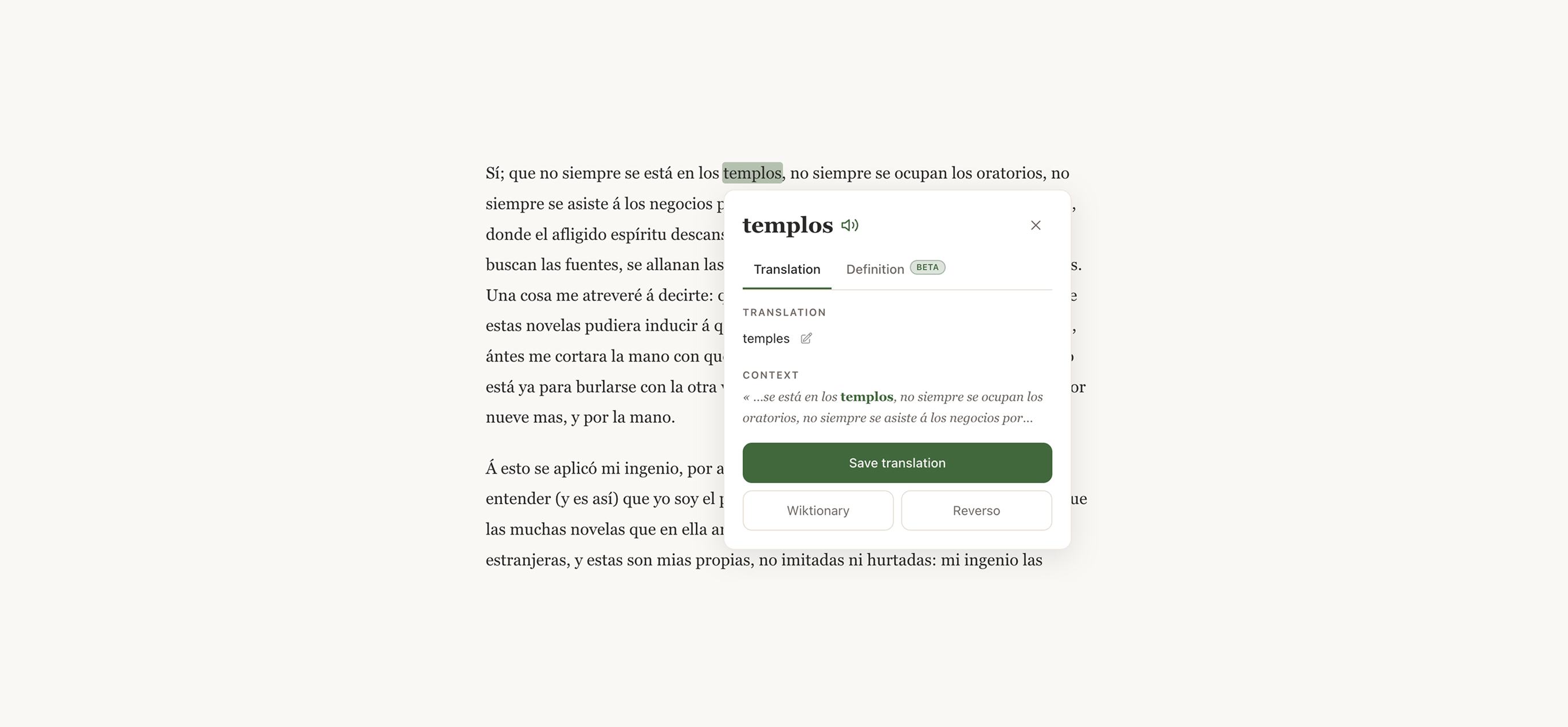
Vocabulary you run into while reading turns into a review card, and your progress before the exam stays in view.
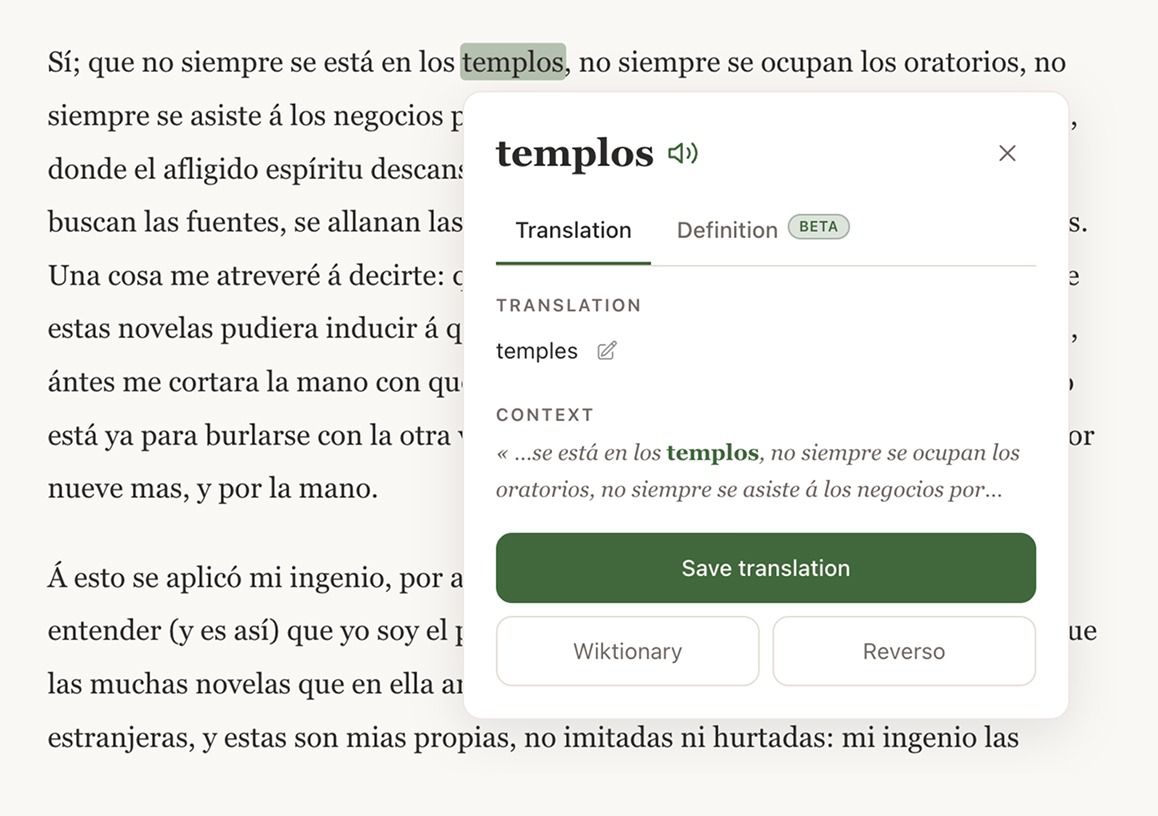
Vocabulary translated without leaving your reading
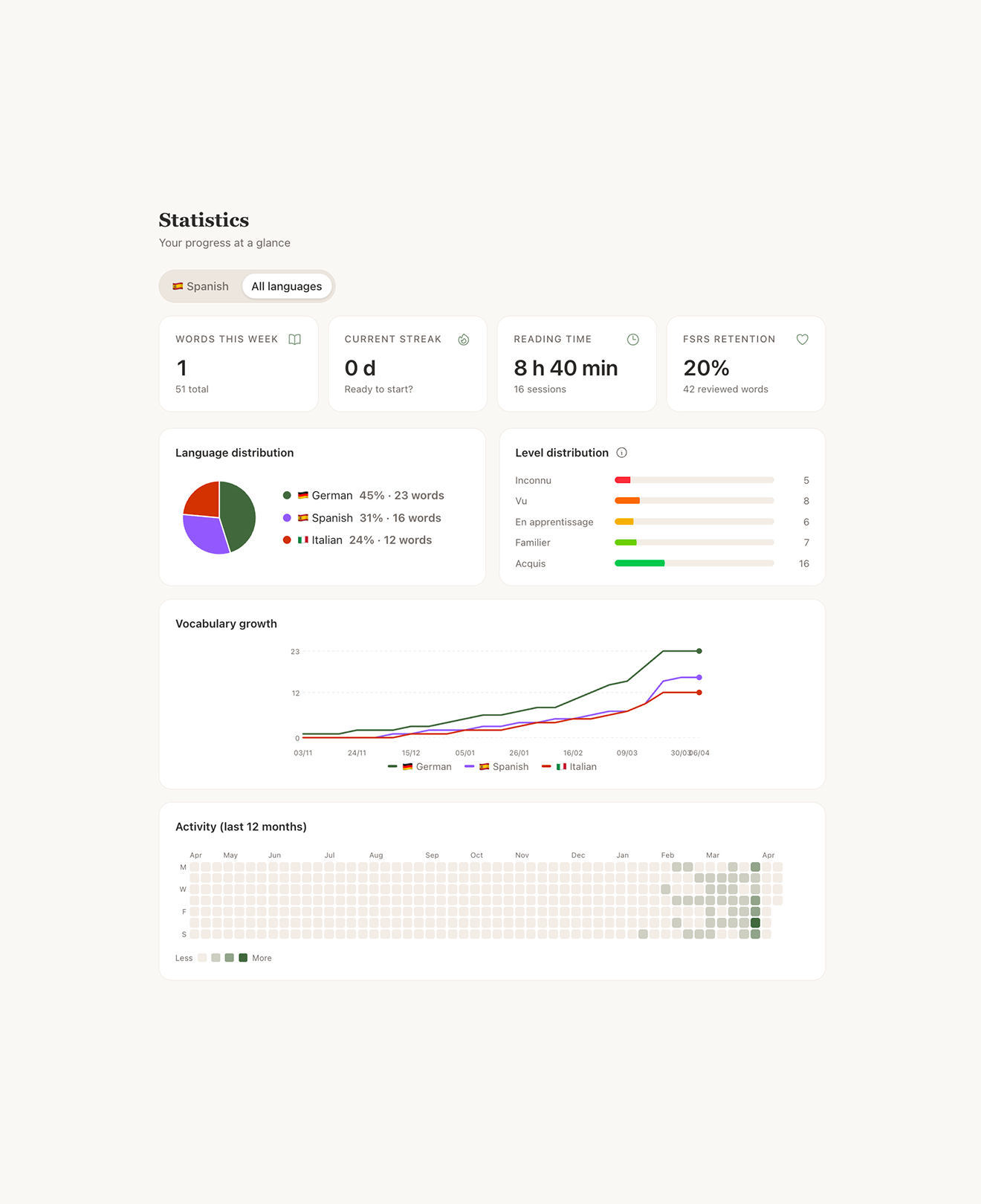
Your progress before the exam, at a glance
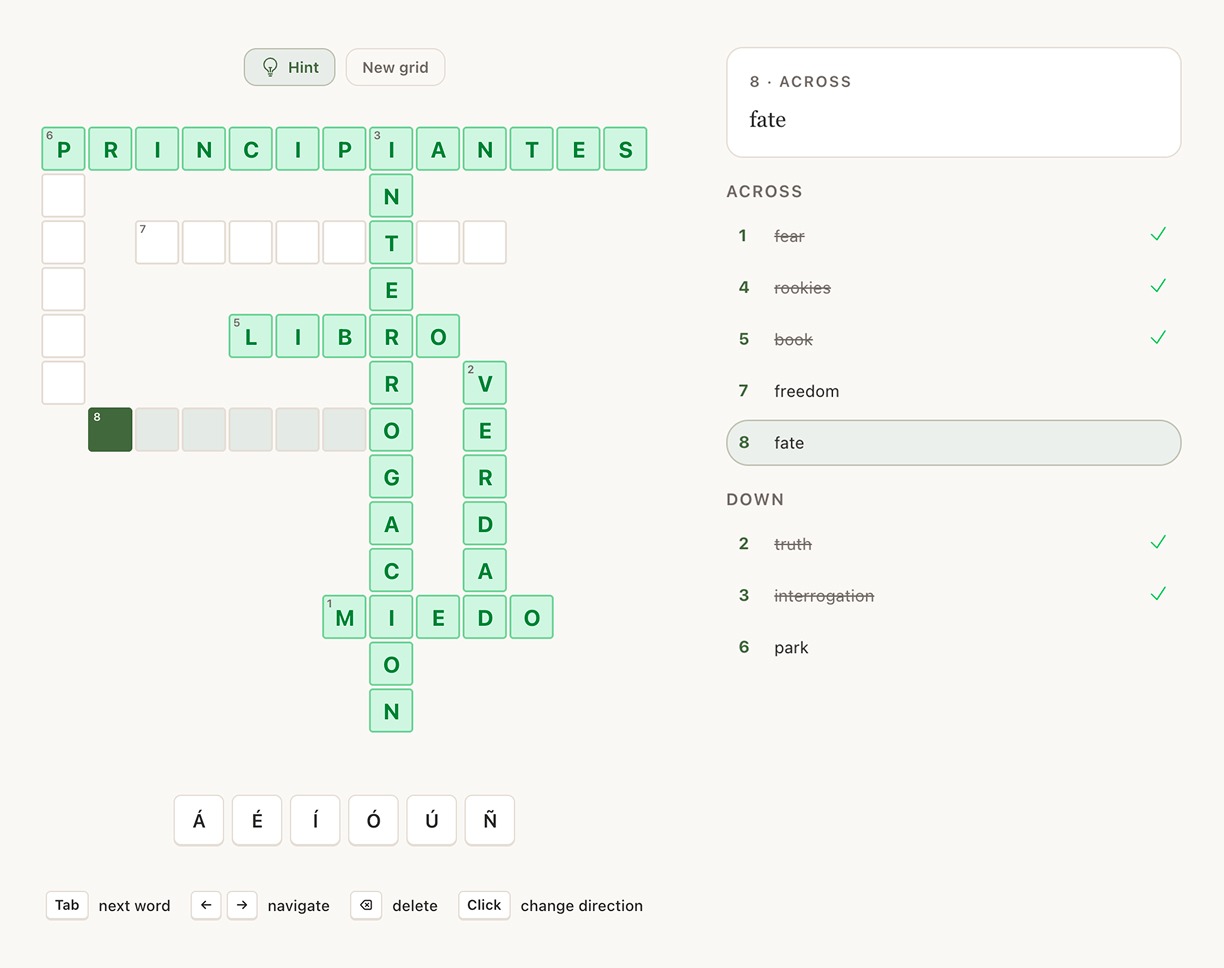
Vocabulary reviewed as a game, not rote memorization
The science
Why cramming the night before isn't enough: spaced repetition (FSRS)
FSRS calculates, for every word you learn, the exact moment you're about to forget it, and resurfaces it right before that happens. Reviewing a word once, the night before the exam, produces memory that fades fast (the gray curve). With reviews spaced over several days, retention climbs in steps and stabilizes (the green curve): that's the difference between a word you vaguely recognize on exam day and one you understand instantly in an unfamiliar text.
Vocabulary retention before the exam
I started three weeks before my exam without much hope. My reading comprehension genuinely improved, and the score followed.
Liam, 17
I've had a weak level for years despite hours of tutoring. Reading stuff I actually cared about instead of vocabulary sheets unlocked something nothing else had.
Ava, 16
15 minutes at night between other subjects was the only format I could actually stick to.
Ethan, 18
Vocabulary flashcards or Duolingo instead? Here's the gap.
Flashcards fade fast once memorized without context, and Duolingo teaches isolated vocabulary through repetitive drills, not the comprehension of an unfamiliar text that exams actually test. Lira does the opposite: you read real texts at your level, and FSRS handles memorization in the background.
Vocabulary flashcards + Duolingo
- ✗Trains comprehension of an unfamiliar text
- ✗Long-term memory (FSRS)
- ✗Vocabulary in context
- ~Free to start
Lira
- ✓Trains comprehension of an unfamiliar text
- ✓Long-term memory (FSRS)
- ✓Vocabulary in context
- ✓Free to start
Go further
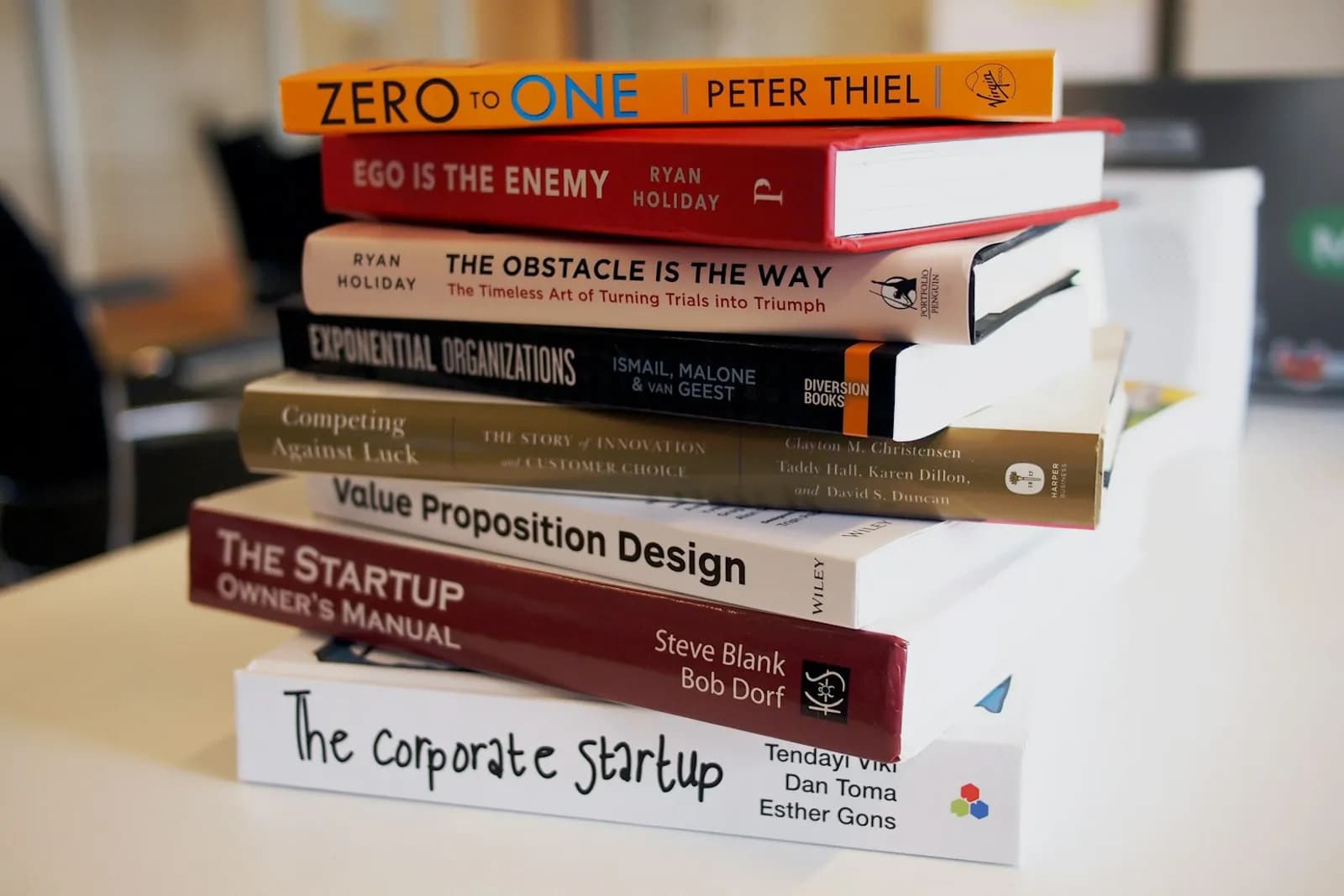
Learn a Language by Reading: The Complete Guide
How to learn a language by reading real texts: the research behind it, how much reading is enough, and a step-by-step method.
Extensive Reading: The Complete Guide to Learning a Language
Extensive reading means picking texts you already understand at 90-95%. Here's why it works, how to start with Lira, and how to avoid common mistakes.

Ready to move fast on what actually matters before the exam?
Start today, for free, with a text at your level.
Start for free