
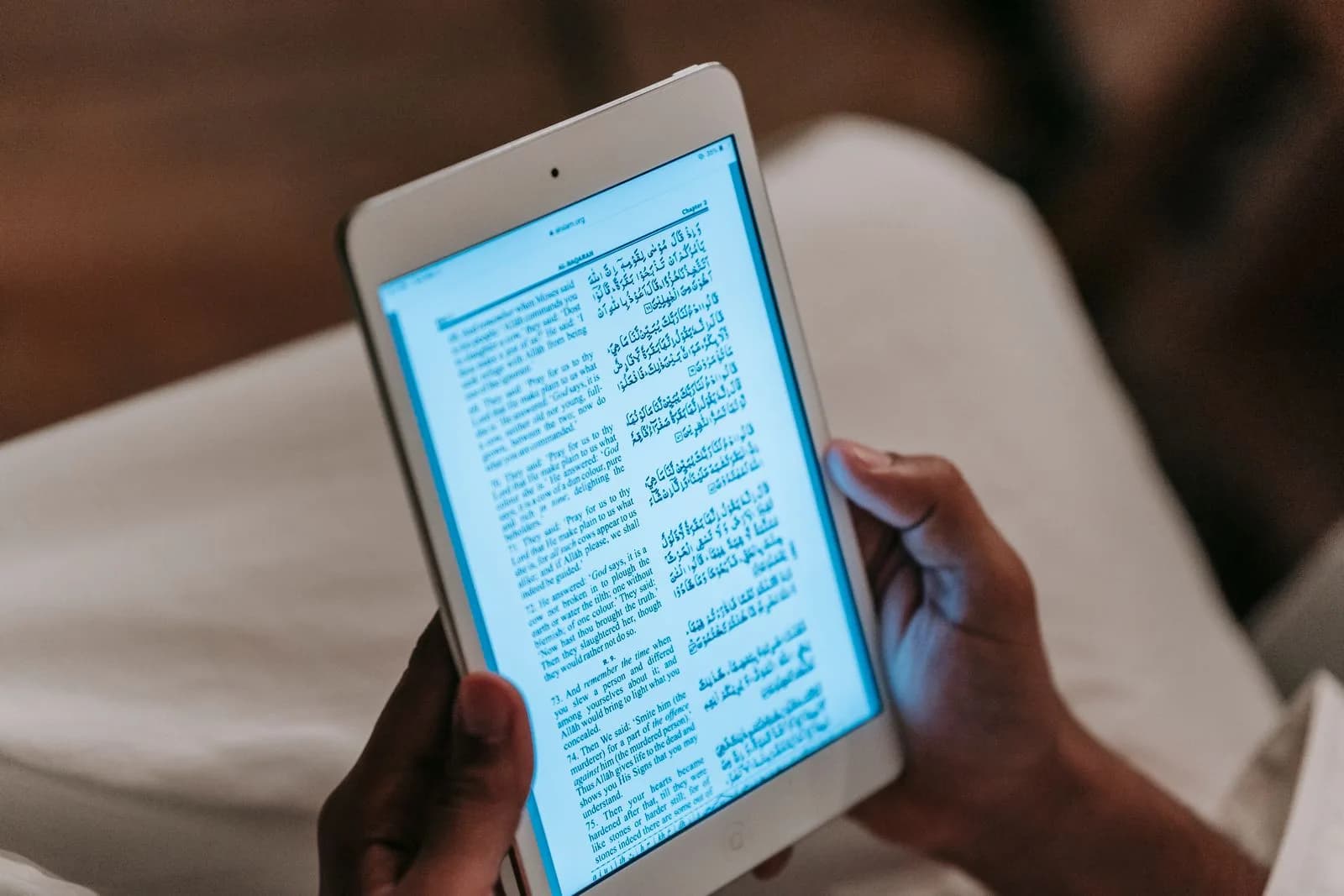
Comparison
Ebook or Physical Book: Does the Format Matter for Language Learning?
For learning a language by reading, the format matters less than what happens the moment you hit a word you don't know. A paper book and an ebook can deliver the exact same text, but they don't deliver the same lookup experience, and lookup friction is what actually determines whether you keep reading or put the book down.
Does research say anything about ebooks vs paper for comprehension?
Most comprehension research comparing digital and print reading looks at general reading, not language learning specifically, and the results are mixed rather than a clear win for either format. Some studies find a small comprehension edge for paper with long, linear texts like novels, often attributed to better spatial memory of where things are on a physical page. Others find no meaningful difference once you control for reading purpose and familiarity with the device.
What that research doesn't measure is the specific bottleneck of reading in a foreign language: constantly needing to check unfamiliar words. That's a different task from comprehension of a native-language text, and it changes which format actually helps more.
Where paper books fall short specifically for language learners
A paper book forces a hard choice on every unknown word: stop and reach for a dictionary or your phone, breaking the reading flow completely, or guess from context and keep moving, which works sometimes but leaves gaps that compound over a chapter. Neither option is free. The first kills momentum, especially in the early stages when unknown words show up every few lines. The second risks building an inaccurate mental model of a word's meaning that then needs correcting later.
There's also no way to track which words you've looked up before. Flip back through a paper book to find "was that word I already checked?" and you'll rarely bother, so the same word gets looked up, or skipped, over and over without building toward retention.
Where ebooks and reading apps close that gap
A digital format removes the stop-and-search cost almost entirely. Tapping or long-pressing a word on a screen surfaces a translation in a second or two, without leaving the page or losing your place in the sentence. That single difference changes the math on how much unfamiliar vocabulary you can tolerate in a text before reading stops feeling productive and starts feeling exhausting.
The bigger structural advantage shows up over time rather than in a single reading session. A reading app that logs every word you've tapped can tell the difference between a word you've seen once and one you keep needing to check, which is exactly the information spaced repetition systems need to schedule review efficiently. A paper book has no memory of your reading history at all; every session starts from zero.
This is why Lira is built around digital import, not a print recommendation
Lira lets you import your own EPUB, PDF, or plain text and read it with tap-to-translate built in, so the lookup speed described above applies to books you already own rather than a fixed in-app library. If you haven't imported anything yet, our step-by-step import guide walks through EPUB, PDF, URL, and plain text formats and how to start reading right after.
Words tapped more than once move automatically into spaced repetition review with FSRS, turning the passive act of looking something up into the first step of actually remembering it, something a paper dictionary lookup can't do on its own.
So is paper ever the better choice?
For pleasure reading in your native language, or once you're advanced enough in a foreign language that lookups are rare, paper's downsides mostly disappear, and some readers genuinely focus better without a screen's notifications nearby. But for a beginner or intermediate learner reading in a language they're still building vocabulary in, the frequency of lookups makes the format choice materially different, not just a matter of preference. Our full guide to learning a language by reading covers the broader method this fits into, including how much reading is actually needed at each level.
FAQ
Is an ebook always better than a physical book for language learning?
Not universally, but for any learner still building vocabulary, meaning most people below an advanced level, the reduced friction of tap-to-translate lookup on a digital format tends to outweigh paper's other advantages. The gap narrows a lot once you're reading close to 95%+ comprehension without help.
Can I still use a physical book I already own to learn a language?
Yes, but you lose the fast lookup and automatic review tracking that a reading app provides. If you already own a physical copy of a book, some readers scan or photograph pages to use with a translation tool, though that adds friction of its own compared to importing a digital file directly.
Does reading on a phone screen hurt language learning compared to a dedicated e-reader?
Not meaningfully for vocabulary acquisition specifically. A dedicated e-reader's main advantage is eye strain over very long sessions, which matters more for pleasure reading than for the shorter, more intensive sessions typical of active language learning with lookups and review.
For more on how Lira handles imported books and vocabulary review, check our FAQ or reach out through our contact page.
Claire
Editor at Lira, self-taught in 3 languages, she tests every method or tool before writing about it.
Start reading in your target language
Import a book, an article, or pick a free classic, and Lira translates unknown words as you go.
Start for freeRelated articles
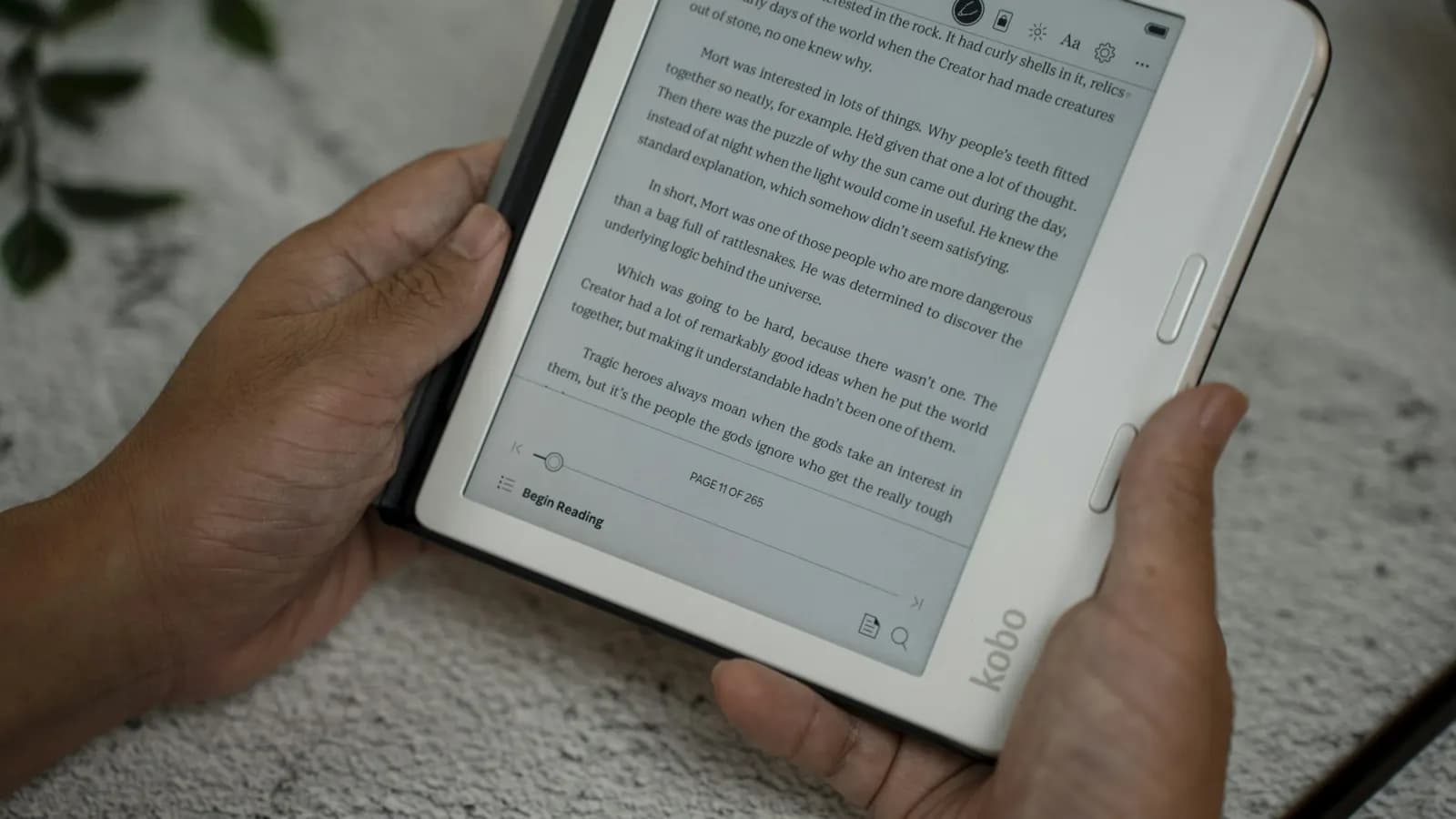
Readlang alternative: read without free plan limits
Readlang caps phrase translations and context explanations on its free plan. Here's what Lira does differently, no filler.
How FSRS spaced repetition works in Lira
FSRS calculates the optimal review interval for every word you learn. Here's exactly how that works in Lira, word by word.
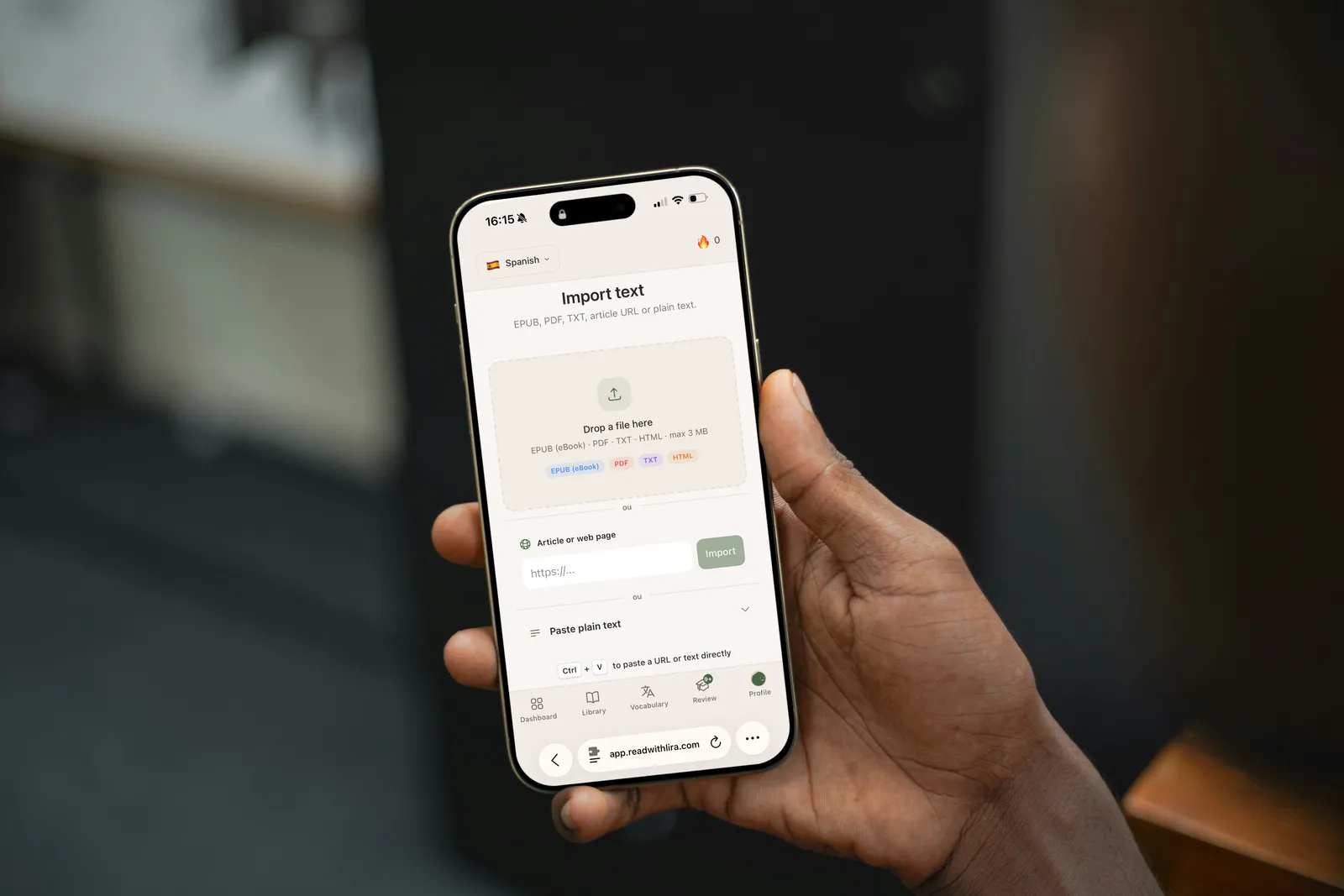
How to Import a Book or Article Into Lira
A step-by-step guide to importing an EPUB, PDF, URL, or plain text into Lira, and how to start reading the right way.