
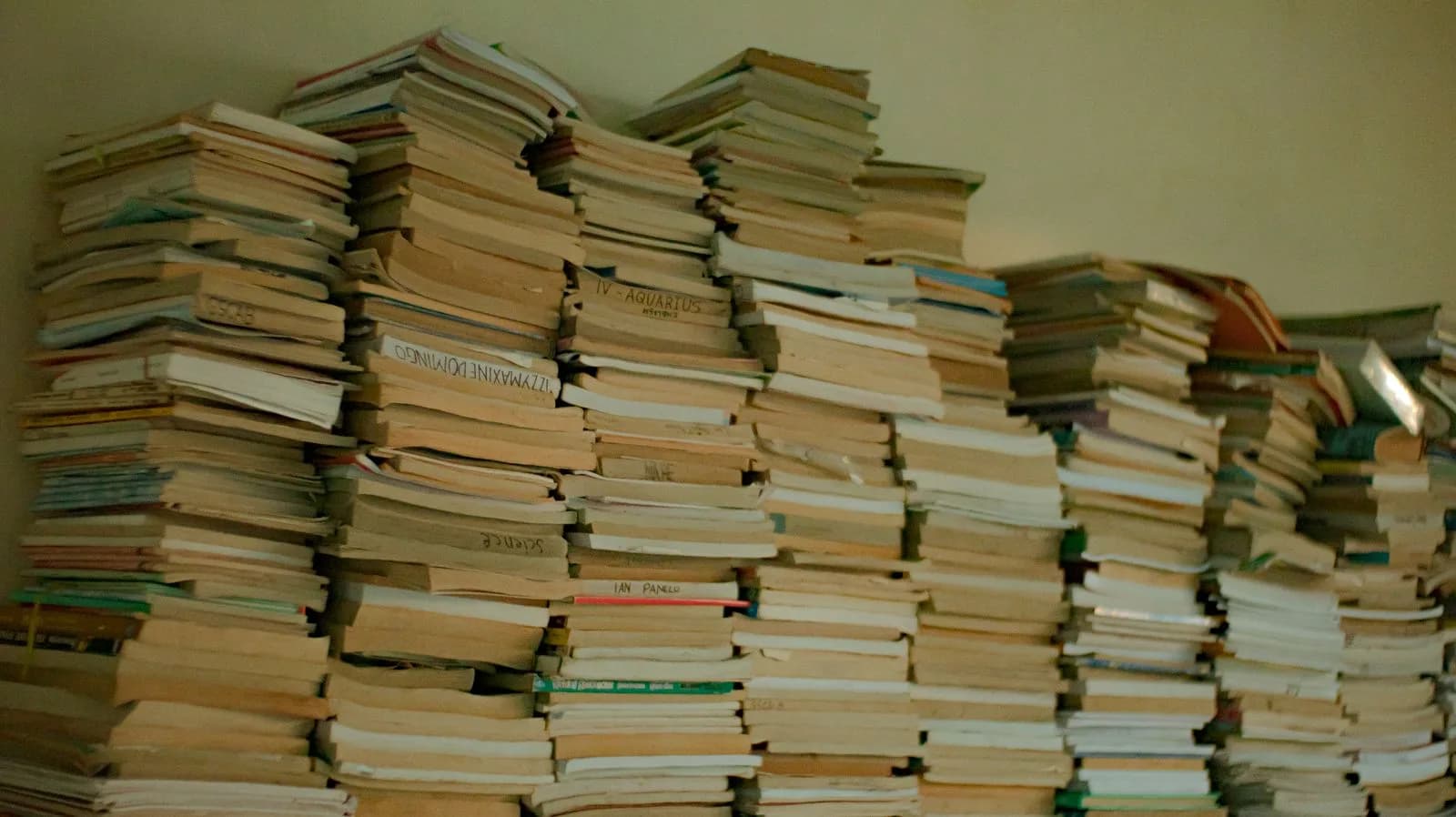
Comparison
Extensive vs Intensive Reading: Which One Actually Works?
What's the difference between extensive and intensive reading?
The extensive vs intensive reading debate comes up often among learners trying to structure their practice. Extensive reading means reading a lot of easy, fluent text, without stopping on every unfamiliar word, purely to get massive exposure to the language. Intensive reading, by contrast, means analyzing a short text in depth, sentence by sentence, dictionary in hand, often with grammar annotations.
These two approaches serve different goals. Extensive reading builds fluency and automatic recognition of common structures and vocabulary. Intensive reading builds precision, fine-grained understanding of complex syntax or rare vocabulary.
Most school-based teaching methods rely almost entirely on intensive reading, a short text dissected in class for an hour, which explains why so many learners never build the stamina needed to read a whole book in a foreign language.
Why does extensive reading work better for long-term acquisition?
Extensive reading exposes you to vocabulary repeated naturally across varied contexts, which favors better long-term retention according to the comprehensible input theory formalized by linguist Stephen Krashen (Wikipedia, Input hypothesis, 2024). See our detailed article on comprehensible input and Lira's method.
Reading volume matters more than word-for-word comprehension precision. A learner who reads ten easy books generally retains common vocabulary better than a learner who dissected a single hard text over the same amount of time, because natural spaced repetition of vocabulary across several different texts reinforces memorization.
The real trap with poorly practiced extensive reading is picking texts that are too hard, thinking it speeds up progress. The 90-95% known-vocabulary rule remains the most reliable benchmark: below that, reading turns back into a decoding exercise instead of fluent acquisition.
Why does intensive reading still matter?
Intensive reading builds a skill extensive reading doesn't develop on its own: the ability to break down a complex sentence, grasp a precise grammatical nuance, or analyze a dense literary text where every word counts.
In practice, intensive reading is irreplaceable for preparing a formal language exam, where syntactic precision matters as much as overall comprehension, or for analyzing an academic text where one misread word changes the entire meaning of a paragraph.
Common oversimplification to avoid: thinking intensive reading is "outdated" next to extensive reading. Both methods serve different goals, general fluency on one side, targeted precision on the other, and complement each other rather than compete.
How do you combine both methods effectively?
A common split cited in language teaching is spending roughly 70% of your reading time on extensive reading, and 30% on intensive reading, applied to a specific text that deserves it (a particularly dense passage, a grammar structure you need to master).
In practice, that means reading most of your books or articles straight through, without breaking your flow to analyze every turn of phrase, and reserving sentence-by-sentence analysis for specific passages you personally flag as worth digging into.
The main friction point in extensive reading stays looking up unfamiliar vocabulary: every interruption to search a word in an external dictionary turns an extensive session into an improvised intensive one, breaking the rhythm you were after in the first place.
How does Lira make extensive reading easier day to day?
Lira was built specifically for extensive reading: tap-to-translate on any unfamiliar word lets you keep reading without breaking your flow, unlike an external dictionary that forces you out of the text every time you look something up.
That doesn't stop you from doing intensive reading occasionally, you can always deliberately stop on a specific passage, but the default setting stays geared toward volume and continuity, the core goal of extensive reading.
Words you look up while reading then get queued into spaced repetition using FSRS, reinforcing what extensive reading already does naturally: meeting a word several times in different contexts until it's genuinely acquired.
Our extensive reading guide for language learners breaks down how to structure a regular practice, and our tutorial on how to import a book or article into Lira covers the concrete steps to get started.
Frequently asked questions
How much time per day should you spend on extensive reading? 15 to 20 minutes a day is enough for noticeable results over a few months, consistency mattering more than the length of any single session.
Is intensive reading necessary for a beginner? Not as a priority. A beginner generally benefits more from extensive reading on very simple texts, intensive reading becoming more useful from an intermediate level onward, once syntax gets more complex.
Can you do extensive reading at an A2 level? Yes, provided you pick very simple texts, like children's books or adapted graded readers, following the 90-95% known-vocabulary rule.
Does extensive reading replace grammar lessons? No, it complements them. Explicit grammar helps you correct mistakes and understand precise rules, extensive reading trains automatic recognition of those rules in real context.
For more on the levels and languages Lira supports, check our FAQ.
Claire
Editor at Lira, self-taught in 3 languages, she tests every method or tool before writing about it.
Start reading in your target language
Import a book, an article, or pick a free classic, and Lira translates unknown words as you go.
Start for freeRelated articles

How to Restart Learning a Language You Abandoned Years Ago
Years of no practice feel like starting over, but they're not. Here's what's actually still there in your memory, what isn't, and a realistic mindset for picking the language back up.
Why You Forget Vocabulary Right After Learning It (and How Spaced Repetition Fixes It)
You look up a word, feel confident you know it, and it's gone within a day. This isn't a memory problem, it's a documented curve with a name, and a specific fix.

The Reading-Listening Gap: Books vs Conversations
You can read a novel but a native speaker on the phone loses you completely. Here's why reading and listening skills develop at different speeds, and what actually closes the gap.